

WEN EL HOB? Rita L'Oujdia refuses to fit one box
With “WEN EL HOB?”, the Moroccan artist turns collaboration, experimentation and creative growth into the next chapter of her musical journey.
With “WEN EL HOB?”, the Moroccan artist turns collaboration, experimentation and creative growth into the next chapter of her musical journey.
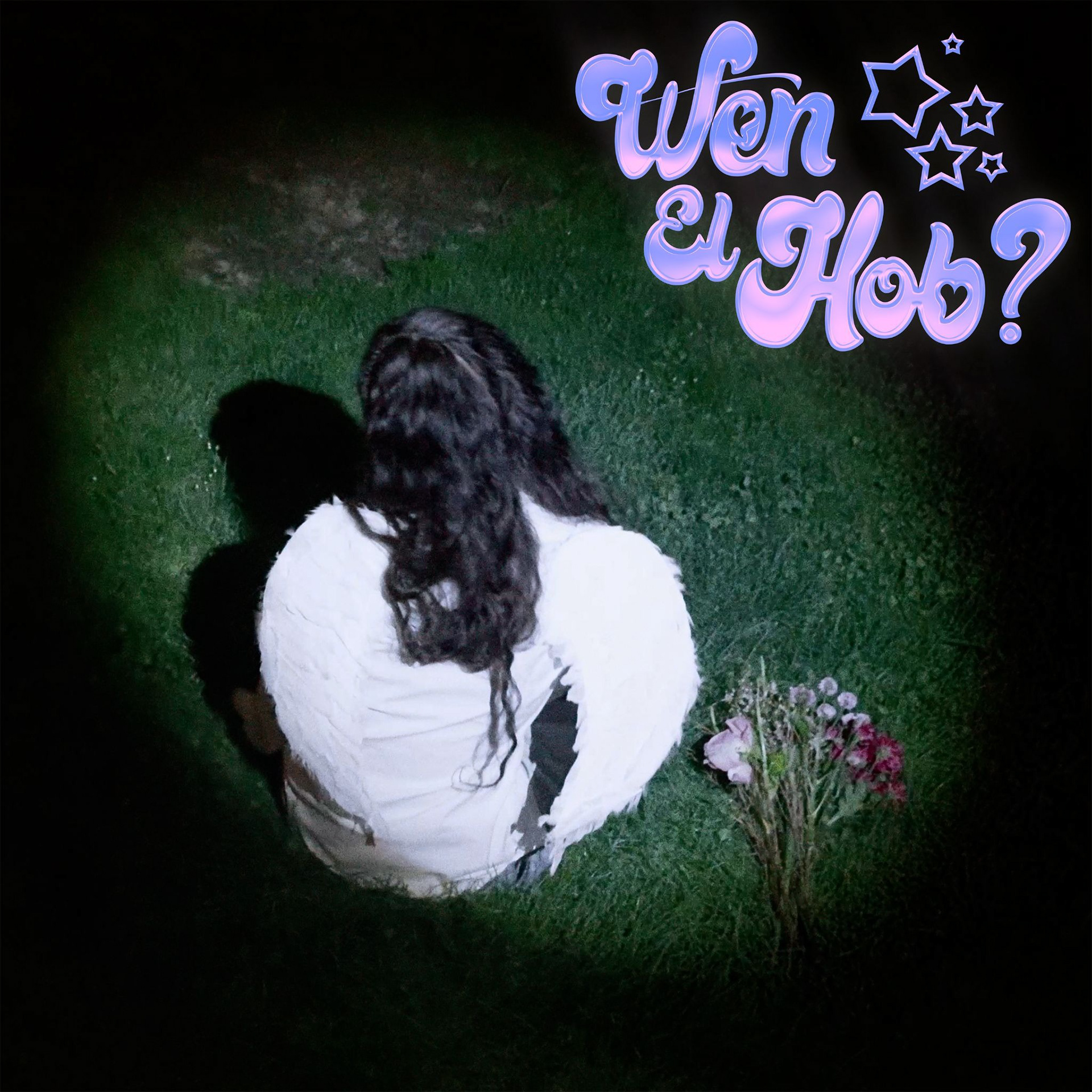
One year after the release of 2Choufat, Rita L’Oujdia returns with WEN EL HOB?, a new single created with Moroccan rapper FRIZZY and producer Zouj.
The track first took shape during a songwriting camp in Berlin hosted by Zouj, where writers and composers including Eva Van Dijk, Tilman Ruetz, Sadek Massaraweh and Anas Amin helped develop the song. It was later refined in Rabat, where Rita and FRIZZY brought their own voices to the project.
Musically, WEN EL HOB? pairs Rita’s soft falsetto melodies with FRIZZY’s snappy punchlines and delivery, all set against Zouj’s signature hard-hitting drums. The track draws inspiration from Drum & Bass while nodding to the current wave of hyperpop.
That tension also shaped the visual world of the song. The visualiser follows Rita at night, holding a bouquet of flowers with no one to give them to, while fleeting images of a lost Cupid appear throughout.
For Rita, the contrast was intentional.
“To me, WEN EL HOB? is extremely bittersweet. There is a softness and a nostalgia that plays out, which contrasts with the heavy sharp drums and fast rhythm.”
The project also reflects a shift in the way she approaches visuals. Rita describes herself as a maximalist, but over the past year she has been learning to strip ideas back to their essential message.
“I’ve been learning that less is sometimes more.”
For a track already dense in sound and instrumentation, simplicity became part of the storytelling.
But WEN EL HOB? also carries another message for Rita.
She has grown increasingly frustrated by what she sees as the limited visibility of women in Morocco’s music industry, whether in charts, festival line-ups or wider conversations around music.
She also questions the tendency to discuss women separately from the rest of the industry, or to position them against one another.
“The standard narrative is that there can only be one female singer and one female rapper.”
For Rita, more collaborations can help challenge that logic. She wants to see more solidarity between women, more genuine relationships and a wider recognition of the range of artists working today.
Her perspective is also shaped by what happened after 2Choufat.
The release introduced her to Zouj, whom she describes not only as a producer, but also as an important mentor in the way she now understands songwriting and the creative process.
Through that relationship, Rita says she learned to simplify, let go of some of the anxiety surrounding independent music-making, and remember that the process itself needs to remain enjoyable.
That lesson also changed the way she thinks about success.
Seeing audiences connect with 2Choufat without the project relying on a large budget showed her that authenticity and a clear feeling can sometimes travel further than scale.
Since then, she has toured in Germany and France, developed her live show and continued collaborating with other artists.
The result is an artist who seems increasingly comfortable resisting easy categorisation.
Rita does not imagine herself belonging to one genre. Instead, each release becomes another part of a musical identity that she is gradually defining for herself.
“With each release, I am building my own box, crafting it, personalising it and making it inherently my own.”
That box can hold reggaeton, raï, chaabi, pop or Drum & Bass. The consistency, for her, is not the genre but the presence of a recognisable Rita L’Oujdia perspective.
WEN EL HOB? is one side of that identity, but it is not the final destination.
Rita is currently working on a longer body of work that brings together the different sides of herself she has been translating into music.
“The project I am working on at the moment is a longer body of work, which is composed of all those sides of me which I have translated into music, and which I cannot wait for the world to finally discover, as I believe it will all finally make sense.”
Rather than choosing one lane, Rita L’Oujdia appears to be building her own.
Photos : Rita L'Oujdia