

IN CONVERSATION WITH RAMIA BELADEL
On making space for others, cultural ambition, and the realities of being an artist
For Ramia Beladel, creating a work of art and creating a cultural event are not two separate pursuits. Both begin with the same desire to engage with society, question its realities and contribute to change.
A Moroccan visual artist and founder of the Marrakech Short Film Festival, Ramia has spent the past six years moving between her personal artistic practice and the development of opportunities for emerging filmmakers. But rather than seeing these roles as competing identities, she understands them as different expressions of the same creative impulse.
The festival itself has become part of that practice. From its scenography and visual identity to the way audiences experience its spaces, Ramia approaches each edition as an immersive artistic experience. At the same time, her work as a cultural organiser has given her the tools to develop projects, build relationships and navigate the realities of making art.
That dual perspective also brings contradictions. While she works to create opportunities and supportive environments for other creatives, she continues to experience the limitations of the cultural ecosystem as an artist herself.
In this conversation with CULTIQ, Ramia reflects on the relationship between art and cultural entrepreneurship, the meaning of accessibility, the importance of sustained opportunities for young filmmakers, and why building a cultural industry must begin with recognising the value of the people who create it.
An artist in every role
Ramia Beladel does not separate her identities as a visual artist, curator, cultural organiser and founder.
For her, the process of creating an object, an artwork or an event comes from the same place. The audience and context may change, but the underlying motivation remains connected to her desire to participate in change and address social questions through creation.
This approach is particularly visible in the Marrakech Short Film Festival, which she develops alongside her team.
She does not see the festival simply as an event to organise. Its visual identity, communication, scenography and atmosphere are all part of a larger creative composition.
“When I put together each edition of the Marrakech Short Film Festival with my team, I’m not only acting as a cultural entrepreneur. I’m also very much an artist.”
She describes the festival almost as a six-day performance or immersive installation, paying attention to the way audiences experience its spaces through sound, light, visual elements and even smell.
Scents are used intentionally, reflecting her belief that an artistic experience should engage multiple senses.
The relationship between her two practices also works in reverse.
Cultural entrepreneurship has given Ramia practical skills that have become increasingly important to her own artistic development. She has learned to structure projects, communicate a vision, seek funding, build networks and identify the resources needed to bring ideas to life.
She believes the traditional image of an artist working independently in a studio, while galleries or institutions manage everything else, no longer reflects the reality of many creative careers.
The festival has inevitably affected the time available for her personal work. Over the past six years, her artistic production has slowed, although she has continued creating, sometimes through one project a year. Having produced new work last year, she is now preparing an exhibition for next year.
Rather than experiencing this as a division between two worlds, she sees it as a continuous exchange.
Each practice enriches the other, allowing her to explore ideas, engage with society and develop new forms of experience.
The relationship is also deeply personal. Through the situations and responsibilities she encounters, Ramia feels she is continually evolving towards the woman she wants to become.
The tension between giving and receiving
Creating opportunities for other artists was never, for Ramia, simply an act of service.
It also emerged from her own creative identity and her desire to build the kinds of spaces she believes artists should have access to.
This makes cultural entrepreneurship both rewarding and complicated.
She finds genuine fulfilment in creating supportive environments and opportunities for others. Yet, as an artist herself, she continues to expect the same understanding, care and creative ambition from the cultural institutions and organisations she encounters.
That expectation is not always met.
“So there's this constant tension between what I try to offer others and what I hope to receive as an artist.”
Her experience reveals a contradiction that is often overlooked in conversations about cultural leadership.
Those who build opportunities for others may still be navigating the same limitations, disappointments and unmet expectations as the artists they support.
For Ramia, this tension is part of what makes the experience both deeply fulfilling and, at times, deeply disappointing.
When Godot keeps moving
The relationship between Ramia's artistic work and her cultural initiatives becomes particularly clear when she reflects on Waiting for Godot, a project exploring ideas of waiting, stagnation and participation.
She recognises a personal connection between those themes and her decision to create opportunities for others.
In her own words, the relationship is almost therapeutic.
“Instead of waiting for others to create opportunities for me, I started creating them for others.”
Rather than remaining in a position of expectation, she found a way to turn that energy into action.
Creating opportunities for other artists keeps the creative process alive and allows conversations, relationships and possibilities to continue developing.
Yet the act of creating does not eliminate expectation entirely.
She describes a continuous movement between giving, creating and expecting, suggesting that the process never reaches a definitive conclusion.
“And in the end, Godot keeps moving.”

Marrakech as a cultural space
For Ramia, bringing cinema into Marrakech's public spaces is not simply a way to make screenings more accessible.
It is connected to the city's longstanding relationship with storytelling, performance and collective cultural experiences.
Jemaa el-Fnaa represents an important reference in this understanding of Marrakech, where public space has historically served as a place for creativity, exchange and shared experiences.
The Marrakech Short Film Festival draws on this cultural history by bringing cinema into the city and encouraging audiences to reconnect with spaces beyond conventional cultural venues.
“For us, it’s about reactivating these traditions and making public spaces more accessible, inclusive, and safe for young people to meet, exchange ideas, and imagine the future together.”
But accessibility, in Ramia's view, cannot be achieved simply by increasing the number of venues or moving events outdoors.
She believes culture must become a fundamental part of education and wider social development.
This means integrating artistic and cultural thinking into areas that are not always considered part of the creative sector, including healthcare, architecture and urban planning.
Achieving that vision requires collective effort, greater recognition of culture's importance and stronger organisation across the sector.
For Ramia, culture should not remain a secondary activity. It should contribute directly to the way society understands and shapes its future.
What comes after visibility
Visibility is often presented as one of the most important achievements for emerging artists and filmmakers.
Ramia recognises its value, describing visibility through the relationship between light and life.
But she believes recognition alone cannot provide the foundations of a sustainable creative career.
“What the cultural sector needs, beyond visibility, is structure: professionalization, health insurance, and dignity for artists and young filmmakers.”
For her, emerging filmmakers should be able to earn a living from their work while contributing to the cultural and social development of their country.
That requires meaningful institutional support, professional opportunities and conditions that recognise creative work as legitimate labour.
She also considers artistic freedom essential.
Filmmakers need the space and permission to explore ideas, address social issues and contribute to change through their work.
The objective is therefore not simply to help an artist become visible.
It is to create an environment in which that visibility can lead to a sustainable professional life.
Building communities around filmmaking
The initiative originally known as the Low Budget Film Program, now called the Amanar Development Project, reflects Ramia's understanding of what emerging filmmakers need.
Its purpose, she explains, has never been limited to proving that films can be produced with restricted budgets.
Instead, the programme is intended to help filmmakers develop their own creative communities.
Through the projects it has supported, Ramia has observed how a sense of encouragement, recognition and collective support can influence the creative process.
When filmmakers feel that their vision is valued, they become more capable of building teams, forming relationships and developing support systems that extend beyond an individual production.
“It's not only about producing films, but about bringing creatives together around shared ambitions, building meaningful collaborations, and nurturing an ecosystem where filmmakers and their communities can grow together.”
This thinking also shapes her approach to culture as an industry.
Creative talent requires resources, but financial support alone is not enough without a structure capable of sustaining it.
Artists, cultural professionals and those responsible for producing events all contribute labour, expertise and time. Ramia believes these contributions must be recognised and fairly compensated.
Professionalising the sector therefore means addressing both its creative ambitions and its economic realities.
“For me, professionalizing the sector means recognizing its economic value, addressing its financial needs, and building a sustainable system where creativity can truly thrive.”
Partnerships that last beyond the festival
International partnerships have been part of the Marrakech Short Film Festival's approach since its beginning.
For Ramia, however, the value of a collaboration cannot be measured simply by the reputation of the institutions involved.
She sees partnerships as a way to bring international industry players closer to emerging Moroccan filmmakers and create direct access to opportunities that might otherwise appear difficult to reach.
Over the years, the festival has welcomed institutions and festivals including Locarno, Clermont-Ferrand, ZINEBI and TIFF.
These encounters are intended to make the international film industry more approachable, allowing filmmakers to build relationships and understand how professional opportunities can emerge.
Yet Ramia considers continuity essential.
A partnership that exists only during an event may create a moment of visibility, but she is more interested in relationships that develop over time.
“We don't believe in partnerships that exist only for the duration of an event.”
She points to the festival's relationship with ZINEBI, an Oscar-qualifying festival, as an example of this approach.
What began as an institutional exchange has developed into a collaboration creating opportunities for filmmakers from the Amanar Development Project to participate in development initiatives.
For Ramia, this represents the difference between networking as an end in itself and networking that produces meaningful professional outcomes.
She also believes partnerships should be reciprocal.
Marrakech has its own experiences, perspectives and knowledge to contribute. International collaborations should therefore involve exchange and mutual learning rather than treating Moroccan creatives only as recipients of external expertise.
Because resources and time are limited, the festival prioritises partners who understand its vision and demonstrate a genuine commitment to emerging filmmakers.
“Ultimately, the success of a partnership is not measured by the prestige of the names we bring to Marrakech, but by the opportunities that remain for filmmakers long after the festival is over.”
Artistic work is real work
When asked what she hopes future generations of Moroccan artists and filmmakers will no longer have to fight for, Ramia's answer is direct.
Fair compensation.
She believes the cultural sector must move beyond a model in which artists are repeatedly asked to exchange their work for visibility.
“We need to move beyond collaborations that offer visibility instead of compensation, because visibility doesn't pay the rent or the electricity bills.”
For Ramia, artistic production involves real labour.
It requires time, research, skill, dedication and resources, whether the result is a film, an exhibition, a performance or a cultural event.
Treating creativity as secondary, or assuming artists should contribute without compensation, undermines the possibility of building a sustainable cultural industry.
Recognising the cultural value of artistic work must therefore go hand in hand with recognising its economic value.
The question is not simply how to create more opportunities, but how to ensure those opportunities allow people to live with dignity.
“Culture cannot become a sustainable industry if the very people who produce it are expected to work for free.”
For an artist who has spent years creating spaces and opportunities for others, it is a fitting conclusion.
The future Ramia hopes to contribute to is one where artists can continue creating, collaborating and challenging society without having to justify the basic value of their work.
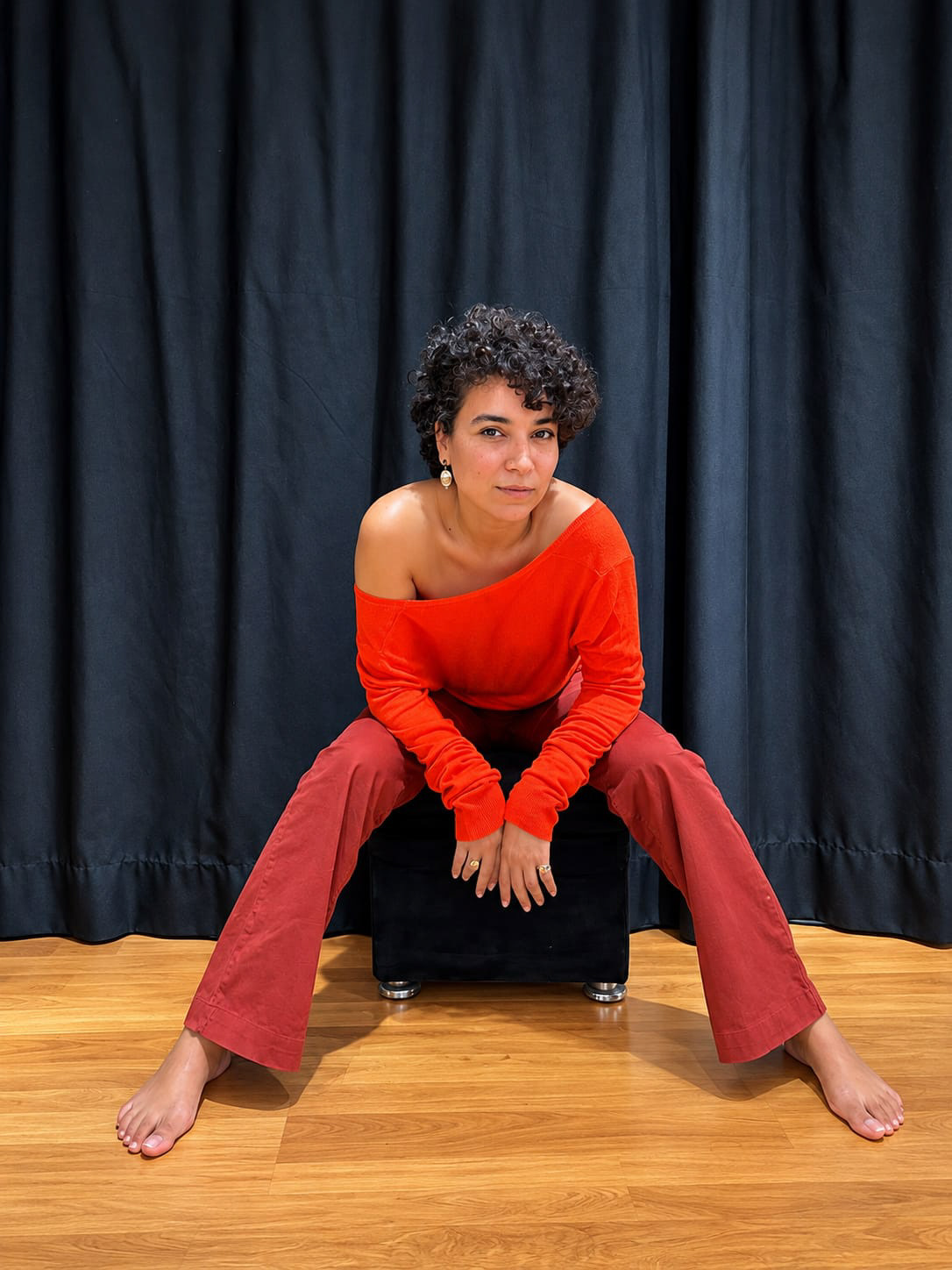
Photo 1 : Ramia Beladel
Photo 2 : Marrakech Short Film Festival
Photo 2 : Marrakech Short Film Festival