
When Morocco faces the Netherlands, identity becomes more than a choice
BY MARIA BELKADI
29 June, 2026
BY MARIA BELKADI
29 June, 2026
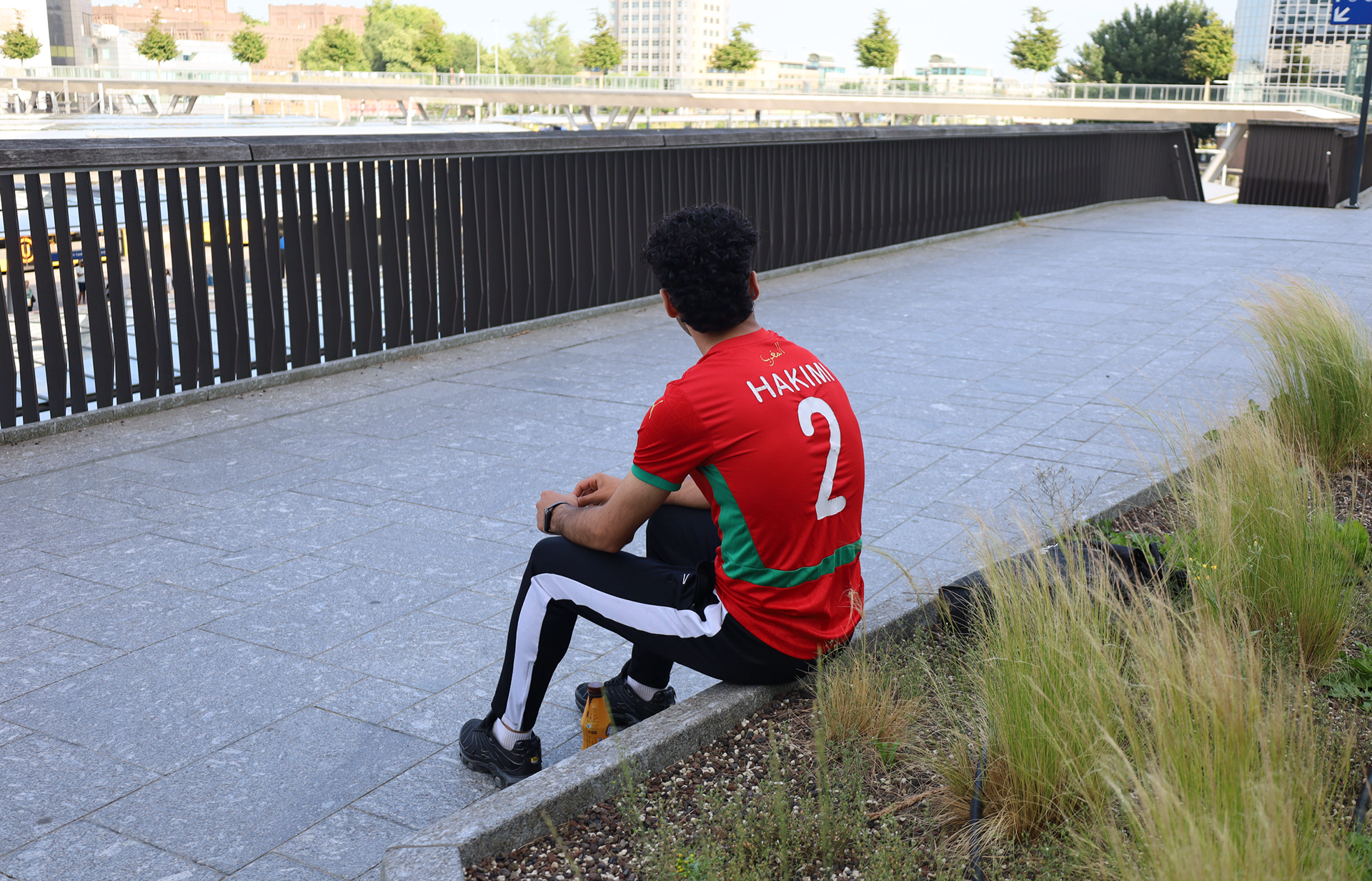
For many Dutch-Moroccans, a Moroccan World Cup victory is a moment of pride, identity, and connection to a heritage that exists thousands of kilometres away. Many young people born and raised in the Netherlands have never lived in Morocco, and some have not visited in years. But when Morocco made its historic run to the semi-finals during the 2022 World Cup, the joy among them was undeniable. Now, with the 2026 World Cup, that same energy is building again. So why do Dutch-Moroccan youth feel such a deep pull toward Morocco?
In the Netherlands, after Morocco’s victories during the knockout stage in 2022, the streets were filled with supporters dressed in red and green. Moroccan flags hung from windows, strangers cheered together in the streets, and car horns blared late into the night. The celebrations were not only confined to people of Moroccan descent, but quickly became a multicultural moment of happiness.
The sense of connection many Dutch-Moroccans feel toward Morocco has roots stretching back decades. When the first Moroccan guest workers arrived in the 1960s, they were expected to stay temporarily. Most did not. They settled, raised families, and became an integral part of Dutch society. But even as they put down roots in Dutch soil, they kept their Moroccan identity close and passed it on. Cooking Moroccan food at home, spending summers in Morocco, speaking Darija or Tamazight with their children, and filling their houses with artefacts from there were not just habits, but ways to keep their heritage alive.
That sense of belonging to their roots exists alongside a harder reality. According to Statistics Netherlands (CBS), 37% of second-generation Dutch-Moroccans report having experienced discrimination based on their ethnicity. As Dutch-Moroccans took to the streets to celebrate during the 2022 World Cup, scenes of unrest in some Dutch cities spread rapidly across social media. Right-wing politicians, including Geert Wilders of the PVV, were quick to push back against the celebrations, framing them as evidence of anti-social behaviour and not part of “Dutch society.”
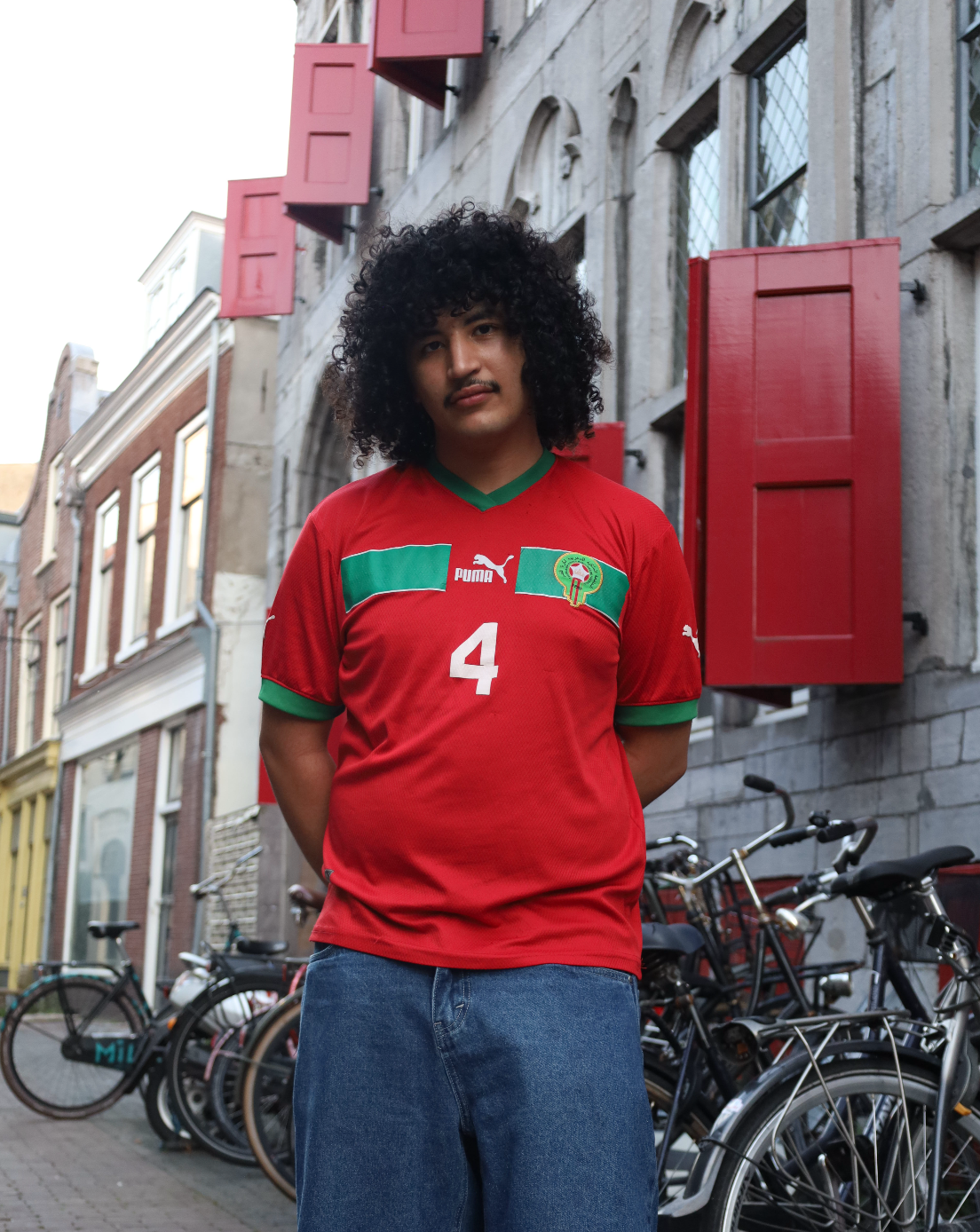
The Dutch-Moroccan population has now reached approximately 420,000 people, of whom 60% were born in the Netherlands. Behind those numbers are real stories of people navigating a double identity whose experiences move between Dutch and Moroccan culture. Rayan is one of them. Born and raised in the Netherlands, the 18-year-old film student speaks Dutch as his native language, studies there, and has many Dutch friends. At the same time, he maintains a strong connection to his Moroccan roots. He regularly visits his family in Kenitra, where many of his relatives still live, proudly wears the Moroccan national football shirt, and hopes to pursue creative work in Morocco one day. His grandfather arrived in the Netherlands as a labour migrant in the 1960s, laying the foundation for the family.
“During the World Cup, I’m slightly more for Morocco,” Rayan admits. “I just experience so much joy when they win because that’s where my roots are. Of course, I’m also happy when the Netherlands win. In a way, I try to support both as much as I can, but when it really comes down to it, I am slightly more for Morocco.”
Despite his strong connection to Morocco, Rayan’s everyday life happens in the Netherlands. Most of his friends are Dutch, and football is something they enjoy together. “I actually have more Dutch friends than Moroccan friends,” he explains. “Most of them support the Dutch team, but many have also told me they’d be really happy if Morocco wins. When Morocco plays, they cheer for them too. It stays fun between us.”
Rayan is under no illusions about discrimination in Dutch society. He knows many Dutch people who reject racism and are willing to say so openly, but he has experienced it firsthand too. Some of those experiences have been deeply hurtful. As support for far-right politics has grown in recent years, he feels that racism has become more visible and openly expressed, making him increasingly aware of the challenges that come with his dual identity.
“I’ve definitely experienced racism,” he says. “Especially late at night, people shout things at me based on my ethnicity, or someone suddenly feels comfortable enough to make a joke about my ethnicity that is loaded with racism. It’s not funny. It’s painful, and it’s completely unnecessary.”
Still, Rayan does not let those experiences define his complete view of the Netherlands. He feels connected to both countries and rejects the idea that supporting Morocco is about believing one nation is superior to another. “I don’t believe Moroccans are better than other people,” he says. “I’m just proud of where my roots are. It’s an important part of who I am. When Morocco wins, there’s this feeling of unity that makes me proud.”
That feeling was especially strong during the 2022 World Cup. After finishing his shift at his side job one evening, Rayan cycled to a multicultural neighbourhood where many Moroccan supporters had gathered to celebrate another Moroccan victory. “Everyone was wearing Moroccan shirts and waving flags. It was so much fun. Everyone was happy, and it was a really beautiful moment,” he recalls. “It’s a shame that the media mostly focused on the negative side of those celebrations.”
For Rayan, supporting Morocco has never meant rejecting the Netherlands. It is not that black and white. Instead, it is an expression of his identity. Many Dutch-Moroccans have grown up feeling pressured to choose between the two, even though both identities can coexist side by side.
The celebrations Rayan describes were playing out in several cities across Europe during that time. For many, Morocco’s run to the semi-finals came as a surprise. Yet for those who kept a close eye on African football, the success was already in the making.
According to African football expert and author of the book “The Football Champions of Africa,” Mustapha Esadik, the results were built on long-term investment at home and a successful approach to connecting with players from the Moroccan diaspora.
“Two things come together,” Esadik explains. “First, Morocco has made enormous organisational investments in football development, infrastructure, and youth academies. Second, they have become exceptionally good at identifying and building relationships with talented players of Moroccan heritage growing up in Europe.”
Many players from the Moroccan team carry dual nationality. Previous generations often chose European national teams over Morocco, whether that was Belgium, France, or the Netherlands. But things have changed drastically.
“Years ago, if you were a top player, you would usually choose to represent a European national team, the Netherlands with players like Ibrahim Afellay, Belgium with Marouane Fellaini, or France with Adil Rami. If you were not quite at that level, Morocco was often seen as a plan B. That has changed. Not only has Morocco improved its scouting and recruitment of dual-nationality players, but the national team has also become far more competitive. Today, Morocco is consistently ranked among the top football nations in the FIFA world ranking. When many players opted for European countries fifteen years ago, Morocco was ranked around 92nd. That difference matters. Players now see Morocco as an ambitious and successful football nation, and that increasingly influences their decision about which country to represent.”
Esadik has also noticed something about the younger generation. Football plays an important role in maintaining cultural connections, particularly among young people of Moroccan descent born and raised in the Netherlands. Major international tournaments bring Moroccan communities across the world together, creating a shared sense of belonging.
“There is not a lot of positive news about Moroccans,” Esadik says. “Young people can recognise themselves in the Moroccan national team and see it as something positive. That is an important reason why many of them support Morocco, and it is something that should not be underestimated.”
Esadik argues that people should not be forced to choose between identities. “You can feel connected to both the Netherlands and Morocco at the same time. Identity is not something static. It is dynamic, and you can support both countries. Some people struggle to accept that identity is multiple and dynamic, and that you can be both Dutch and Moroccan at the same time.”
For Esadik, the success of the Moroccan national team matters beyond football alone. It gives young people a chance to connect with their roots in a positive way and to take pride in an important part of who they are.
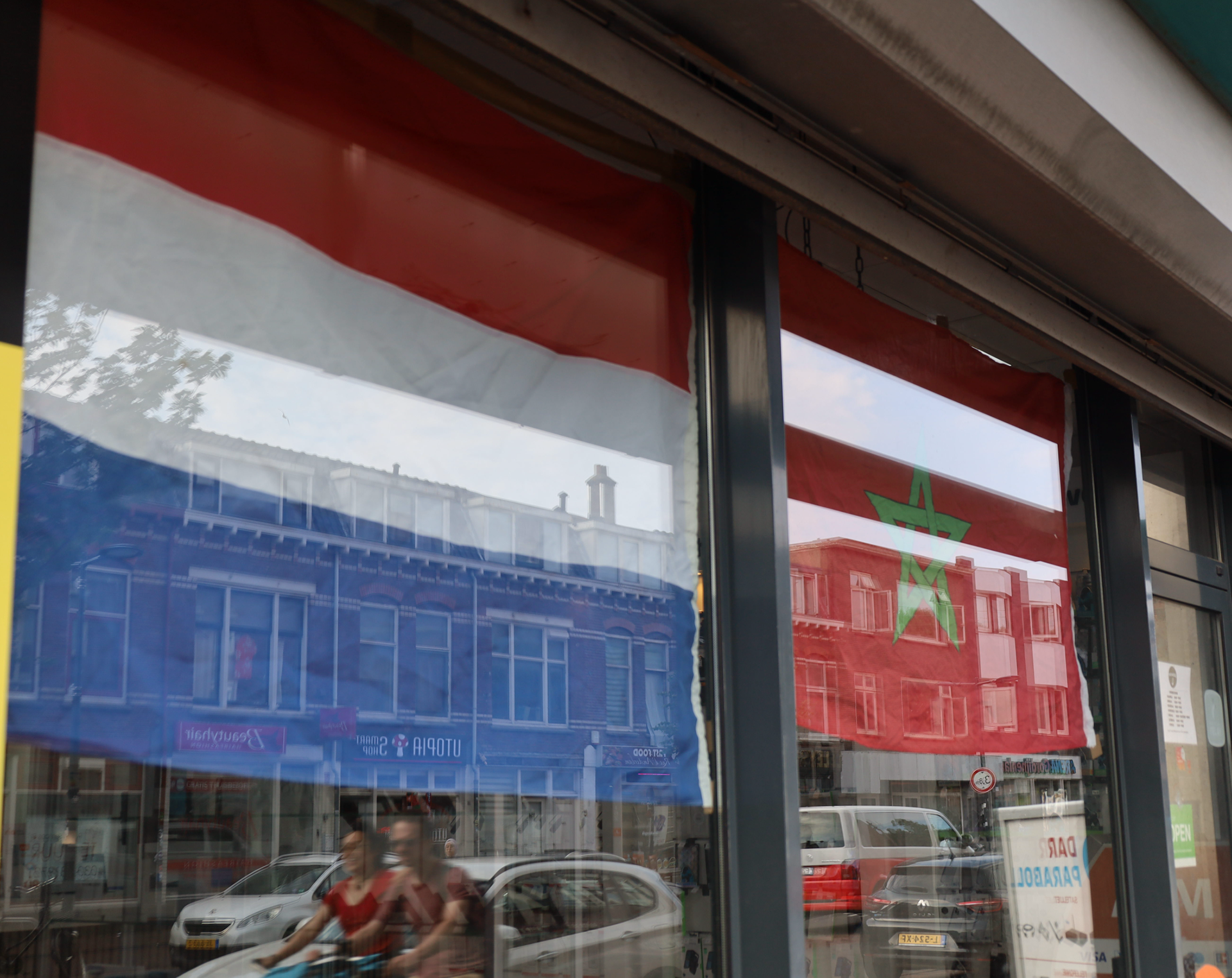
The upcoming match between Morocco and the Netherlands puts many Dutch-Moroccans in a difficult position. While some support both teams, others stand firmly behind Morocco, driven by a strong sense of heritage, pride, and belonging. There are also those who feel they should support the Netherlands more strongly, as it is the country they call home. However, on social media, Dutch-Moroccans who support Morocco appear to be the most vocal. Even though the match will air at 3:00 AM, many people in the Netherlands are expected to tune in. Either way, the outcome will attract even more media attention than it already has.
Photos Maria Belkadi