

IN CONVERSATION WITH MOHAMED MEHDI BENSAID
On cultural ambition, a new creative generation, and Morocco's next chapter
For Mohamed Mehdi Bensaid, thinking about culture means thinking beyond artistic production alone. It means considering the place culture occupies within Morocco's development, its economy, its sovereignty, and the way the country understands and projects itself.
These ideas sit at the centre of Culture: A Moroccan Ambition, an essay born from what Bensaid describes as a conviction that Morocco is living through a decisive period of transformation, one in which every citizen has a contribution to make.
In this conversation with CULTIQ, the Minister of Youth, Culture and Communication reflects on the personal foundations of that conviction, challenges the idea that cultural policy begins and ends with infrastructure, and looks towards a generation of Moroccan creatives he believes could help produce a new golden age of art and culture. He also identifies three transformations he considers essential to unlocking Morocco's cultural potential, and imagines what success could look like a decade from now.
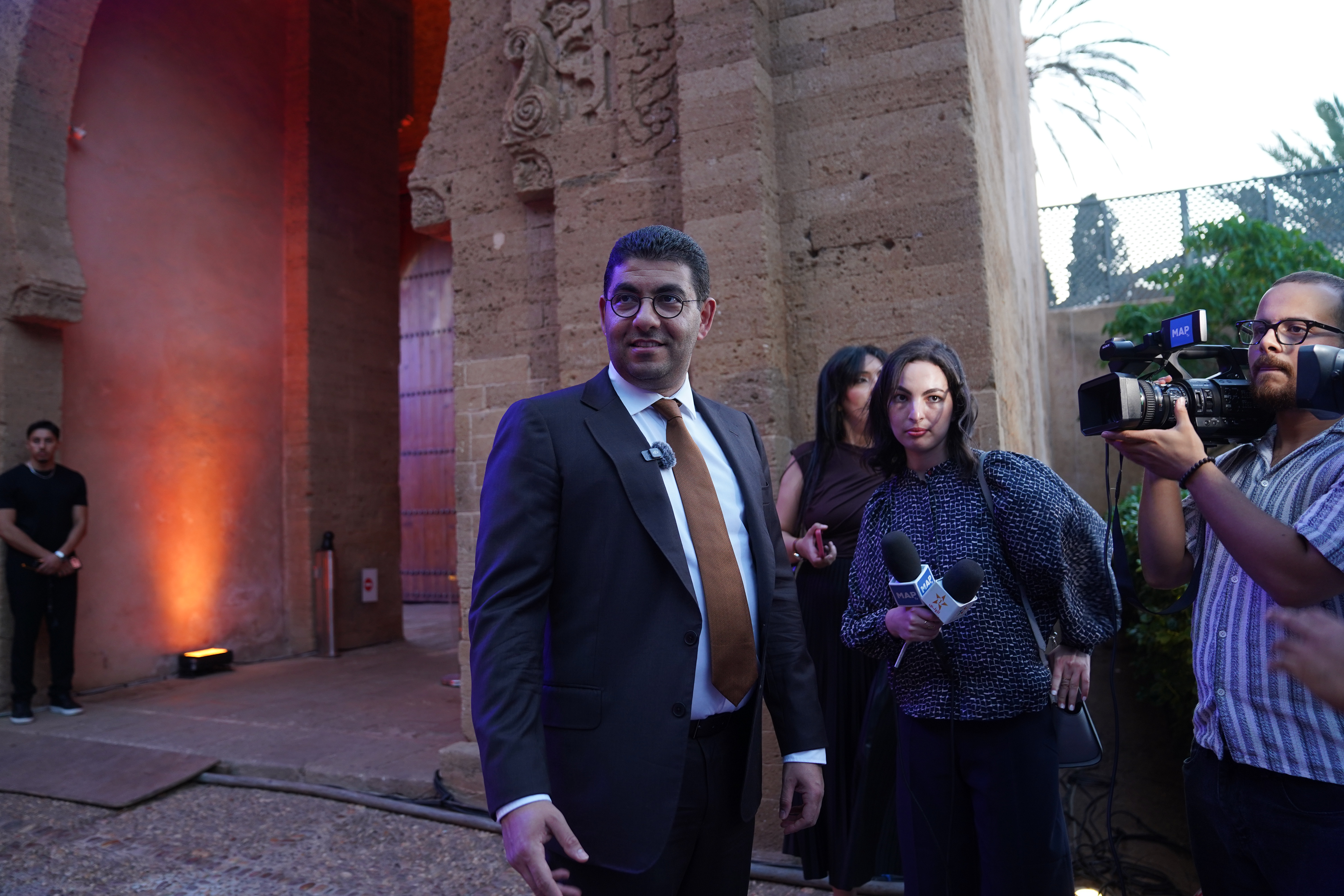
Writing from a Morocco in transformation
Bensaid situates the origins of Culture: A Moroccan Ambition within what he sees as a decisive moment for the country. He describes himself as belonging to a dynamic Morocco undergoing profound transformation, and sees contributing to that evolution as a responsibility shared by citizens.
"We are living through a decisive period in our history and each of us must contribute to it in one way or another," he says.
He places that transformation within the vision of His Majesty King Mohammed VI, may God assist Him, which he says is taking Morocco to a new level. It was from this broader conviction about the country's trajectory, and the responsibility to participate in it, that the desire to write the essay emerged.
A relationship with culture rooted in education
There was no single encounter that suddenly made culture important to Bensaid. Instead, he describes an upbringing in which culture and civic engagement were already present.
Public debate, dialogue and reading formed part of his education, gradually shaping a conviction that would remain with him throughout his journey.
"No serious action or commitment is possible without being rooted in culture and reflection."
Rather than creating this relationship with culture, Bensaid says his ministerial responsibilities, which he describes as both a great honour and a major duty, have reinforced a conviction that was already there.
From cultural sector to national project
For Bensaid, one of the fundamental shifts required is conceptual. Culture has historically been treated as a clearly defined and limited sector. He argues that the contemporary global context requires a different understanding.
He points to an international environment increasingly characterised by competition between narratives and by challenges to Western and other forms of cultural dominance. Within that landscape, he believes Morocco's history gives it both an opportunity and a responsibility.
"Morocco, as a centuries-old nation and a long-established and recognised centre of culture, has a duty to reclaim this vocation with determination and through a clearly defined programme."
At the centre of this argument is sovereignty. Bensaid observes that culture is increasingly regarded internationally as a pillar of sovereignty and believes it should therefore become a genuine national project for an emerging country such as Morocco.
Culture exists beyond buildings
One misconception Bensaid particularly wants to challenge is the tendency to equate cultural policy almost exclusively with infrastructure.
Buildings matter, but his definition of a functioning cultural ecosystem extends considerably further. Cultural programming, mediation, museography and other forms of expertise are not peripheral to culture. They represent professions, economic activities and forms of social interaction in their own right.
"Culture is also, and above all, about soft skills."
Alongside intangible heritage, he argues for greater recognition of what he describes as culture's intangible capital. This encompasses the legal, managerial and financial structures that allow living culture to develop beyond physical spaces.
This responsibility, in his view, extends across the general public, economic operators, public authorities and civil society, whose pioneering contribution he acknowledges. He also sees Morocco's growing number of highly qualified and specialised higher education institutions as an important foundation for developing these capabilities.
Making culture's existing value measurable
Bensaid does not believe culture needs to be introduced into Moroccans' everyday lives. It is already there.
He points to the country's relationship with traditions, cuisine, ceremonies, music, tangible heritage and architecture as evidence of culture's existing presence.
"The tangible impact already exists."
The challenge, for him, is economic consolidation. Much of culture's contribution remains within what he describes as a grey area, where its impact is insufficiently assessed and therefore difficult to quantify or improve.
Measurement consequently becomes part of the cultural ambition. He says tools are beginning to be developed to evaluate this impact more effectively, with the objective of turning culture's existing presence into a more tangible economic and social lever.
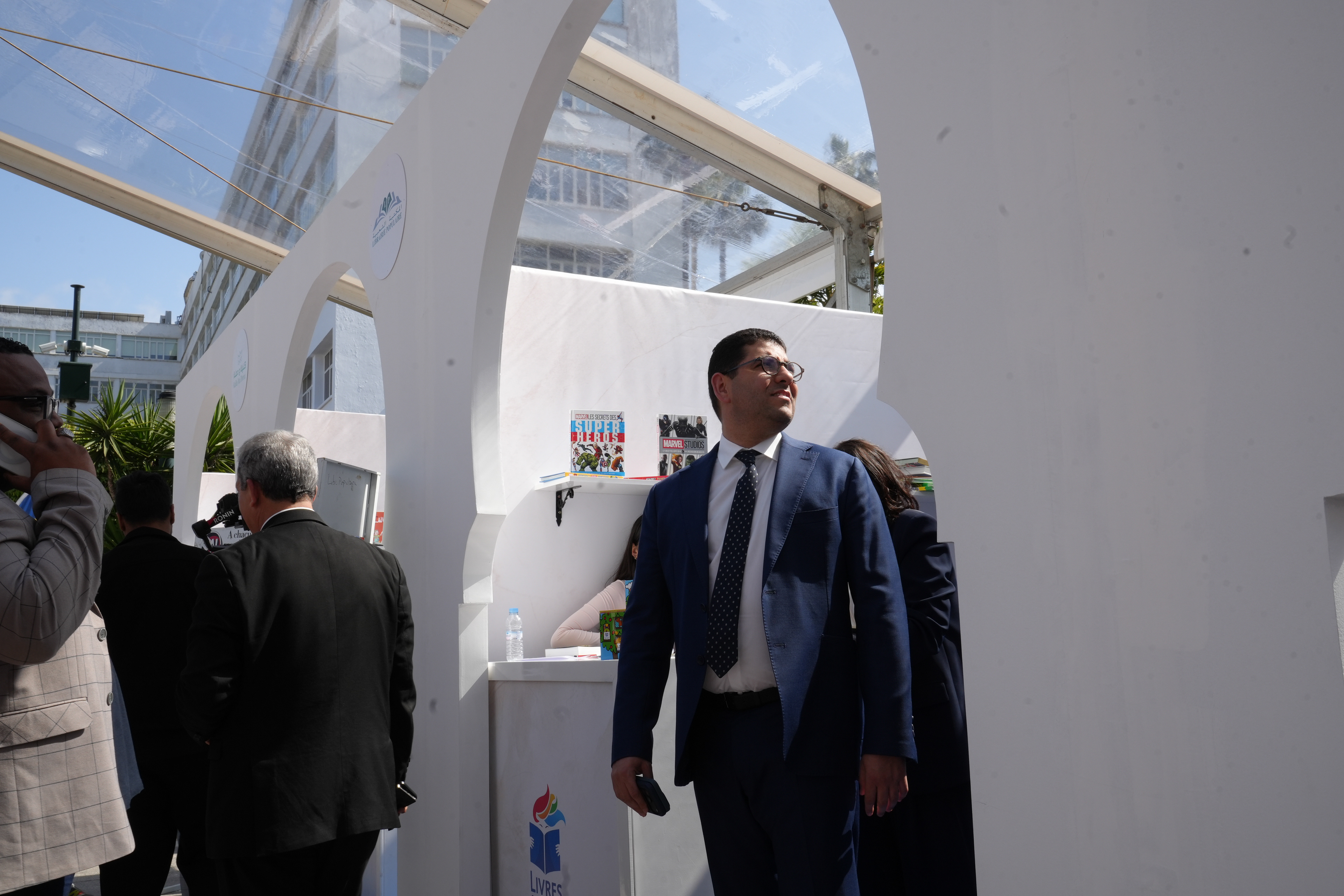
A generation becoming more demanding
When Bensaid looks at Morocco's younger generation, his optimism extends beyond artistic achievement.
He describes Moroccan youth as increasingly educated, connected, multilingual, creative and independent. That evolution, he argues, is also changing what young people expect from institutions.
"Our young people are mature, and they therefore demand a different form of governance."
For public officials, political leaders and decision-makers, he believes this requires greater effectiveness, responsiveness and transparency.
Their creativity is therefore not an isolated phenomenon. Bensaid sees it as part of a wider social dynamism in which young Moroccans have become serious and demanding participants in public life.
International artistic and sporting successes reinforce that conviction for him. In an increasingly open world, young people can compare governance systems and social conditions between countries, which in turn raises their expectations at home.
Three transformations for Morocco's cultural potential
Asked what could truly unlock Morocco's cultural potential, Bensaid identifies three priorities.
The first is structural. Culture, he argues, should become a compulsory component of public policy at every level, from local municipalities to national decision-making. Rather than appearing after programmes have been designed, culture should help inform their conception and implementation. Doing so, he adds, requires substantial budgets and recognition of culture's central importance.
The second priority is the development of cultural and creative industries.
Drawing a parallel with Morocco's successes in automotive manufacturing and aeronautics, Bensaid believes sustained, serious and multidisciplinary investment could position the country prominently within the global creative economy.
"Serious and multidisciplinary investment in the cultural and creative industries could make Morocco a leading country on the global stage."
His third priority returns to soft skills. Morocco, he argues, needs considerably more training in professions that remain insufficiently known or valued, from cultural programming, mediation and event management to audiovisual technicians, engineers and programmers.
The arrival of artificial intelligence makes this even more consequential in his view. These, he argues, are jobs of the future.
All three priorities, alongside other dimensions of Morocco's cultural development, are explored extensively in Culture: A Moroccan Ambition.
Imagining a new golden age
For Bensaid, supporting a new generation of creators is not solely a question of funding artists. He points to financial, legal and technical support mechanisms developed in recent years, both within Morocco and internationally, but believes the relationship between the different actors surrounding culture must now evolve further.
His hope is for what he calls a genuine symbiosis between creators, economic operators and public authorities.
He points to South Korea, Türkiye and Poland as examples of what such relationships can produce. Art, business and public decision-making remain distinct fields, he argues, but distinction does not require opposition or indifference.
That possibility informs one of the conversation's most ambitious statements.
"The new generation of Moroccan creators has the potential to produce a new golden age of art and culture in Morocco, comparable to those that flourished under the Marinid or Saadian dynasties, but using the tools of today and tomorrow: artificial intelligence, robotics and new philosophical concepts."
The reference to earlier periods of Moroccan cultural flourishing is therefore not framed as a desire to return to the past. His ambition is for another period of cultural production built with contemporary tools and ideas.
What cultural ambition could look like in 2035
For Bensaid, ambition is not a fixed destination. He describes it as "a horizon that guides action and gives rise to many aspirations."
But when asked to make that horizon tangible, he identifies several concrete ambitions for the next decade.
By 2035 or 2036, he hopes Morocco will rank among the world's fifteen leading exporters of cultural and creative industries.
He also wants Moroccan artistic festivals, which he already considers impressive, to reach a level of international recognition comparable to institutions and events such as the Venice Biennale and Cannes Film Festival.
Finally, he imagines culture occupying a fundamentally different position within Morocco's economy, with the cultural economy representing an essential share of both gross domestic product and national employment.
Together, these ambitions reveal the central argument running through the conversation. Culture, in Bensaid's vision, is not something that sits alongside Morocco's development. The ambition is for it to become one of the forces actively shaping it.
Photos : Mohamed Mehdi Bensaid
Photos : Mohamed Mehdi Bensaid