
Marrakech short film festival returns with a growing international and African focus
From 25 to 30 September, the female-led festival returns to Marrakech with Moroccan and international competitions, Malta as Guest Country, industry development through AMANAR, a focus on African film circulation and screenings across the city.
From 25 to 30 September, the female-led festival returns to Marrakech with Moroccan and international competitions, Malta as Guest Country, industry development through AMANAR, a focus on African film circulation and screenings across the city.
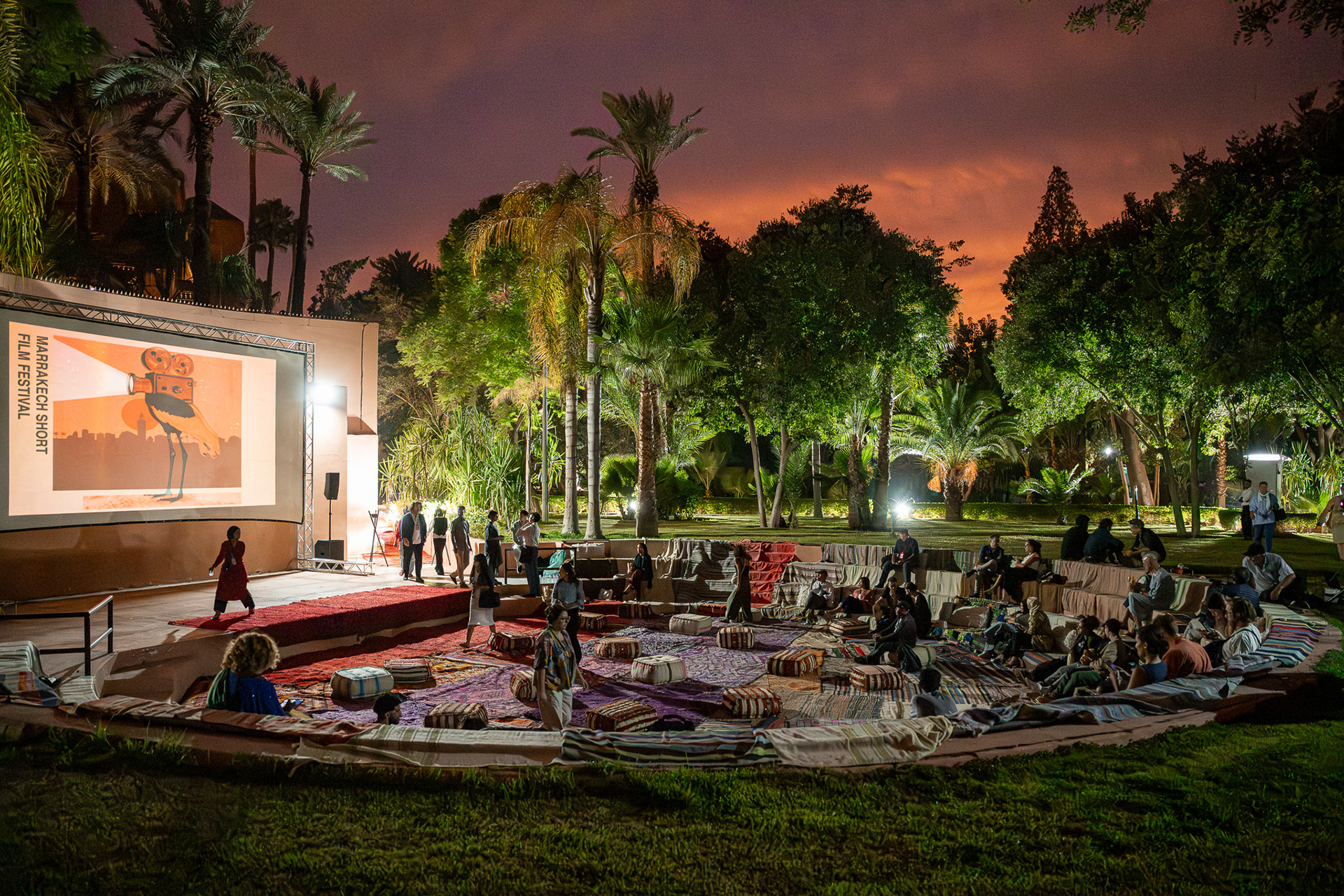
From 25 to 30 September 2026, the Marrakech Short Film Festival, MARRAKECHsFF, returns for its sixth edition with an ambition that increasingly extends beyond the screening of short films.
After receiving more than 400 submissions from over 90 countries across five continents, the female-led festival is bringing filmmakers, actors, producers, programmers, institutions and audiences together in Marrakech for six days of screenings, professional encounters and cultural exchange.
At the centre remains the short film itself, and particularly the opportunity to create greater visibility for a new generation of Moroccan filmmakers.
The National Competition continues to be one of the festival's main pillars, with films competing across the Belarj, Nakhil and Behja prizes. This year's selection includes Fading Candle by Ismail Ait Lahcen, Aicha by Sanaa El Alaoui, Two Ways by Yassine Iguenfer, Mesk Ellil by Rami Adnane, Behind the Curtain’s Edge by Kacem Skalli and Paradise Garden by Sonia Terrab, among other works and talents represented across the different prizes.
Four Moroccan films also join the programme outside competition: Quo Vadis Meryem by Amine Zeriouh, With the Wind by Ines Lehaire, Investigation by Marwan Chiguer and Crawling Birds by Karim Taj.
That Moroccan focus sits within an increasingly international programme.
The International Competition brings films from Italy, Iraq, China, Portugal, Australia, Albania, Lebanon, Kazakhstan, Egypt, Spain, the United Kingdom, South Korea and Japan to Marrakech.
Among them are The Bridge by Giacomo Bendotti, Where The Balloon Led Me by Yasmeen Waleed, The Wind in Ash by Kun Sun, Dog Alone by Marta Reis Andrade, Trading Cards by Radheya Jang, What If They Bomb Here Tonight? by Samir Syriani, The Experiment by Maxim Akbarov, My Brother, My Brother by Saad Dnewar and Abdelrahman Dnewar, and A Very Straight Neck by Neo Sora. The international programme outside competition further brings works from Cambodia, France, Saudi Arabia and Spain.
Together, the two competitions place Moroccan emerging cinema within a much wider conversation, bringing filmmakers working across different territories and cinematic traditions into the same festival.
The people evaluating those films reflect that exchange too.
The National Jury is presided over by Moroccan actor, director and screenwriter Rachid El Ouali, alongside actor, director and theatre educator Hicham Ibrahimi and actress and researcher Jalila Talemsi.
The International Jury is presided over by Tûba Büyüküstün, the internationally recognised Turkish actress, visual artist and UNICEF Goodwill Ambassador. She is joined by Lebanese writer-director Daniela Stephan and Alice Kharoubi, Director of Programming at the Marché du Film, who has spent nearly two decades working within the Cannes ecosystem.
Beyond what appears on screen, MARRAKECHsFF is also asking what happens to filmmakers and their projects next.
For Ramia Beladel, founder and president of MARRAKECHsFF, that role is fundamentally about accompanying talent beyond a single festival moment:
“Every filmmaker and every talent needs companions along the way. MARRAKECHsFF is here to walk that journey with them.”
Its AMANAR Industry & Development programme is designed around that next stage. Emerging filmmakers are brought into contact with producers, programmers, mentors and decision-makers through development sessions, professional meetings and Pitch Days.
Its AMANAR Industry & Development programme is designed around that next stage. Emerging filmmakers are brought into contact with producers, programmers, mentors and decision-makers through development sessions, professional meetings and Pitch Days.
Professionals connected to film festivals, institutions and platforms including Clermont-Ferrand, El Gouna, ZINEBI, FESPACO and CNC, alongside production and industry structures from Morocco, Africa and internationally, are expected to contribute to these professional exchanges.
The ambition is to help create practical connections around projects and careers, while addressing one of short cinema's persistent challenges: how a film continues its journey after its premiere, reaching programmers, new territories and new audiences.
That question of circulation becomes particularly important when looking at African cinema.
African films may increasingly appear at international festivals, but circulation between countries across the continent remains fragmented. MARRAKECHsFF is using its position to encourage stronger relationships between African filmmakers, producers, festivals, curators and distribution networks.
This thinking is particularly visible through Bridges of Reality, the festival's documentary programme dedicated to Africa and its diasporas.
Curated by Alex Moussa Sawadogo, with conversations moderated by Mustapha Sawadogo, the programme is organised around a simple proposition: “When Africa Tells Its Own Story.”
Through films, conversations and professional encounters, Bridges of Reality asks who creates images of Africa, from which perspectives those images are produced and how African filmmakers can strengthen their ability to author and circulate their own narratives.
It also connects questions of representation with something more structural: who produces, distributes and ultimately gets access to those stories.
The festival's international outlook extends beyond industry through another central pillar of its sixth edition: cultural diplomacy.
For 2026, Malta is the Guest Country, creating a specific cultural bridge between the Mediterranean country and Morocco.
The Maltese programme brings together nine short films across drama, animation and documentary, in Maltese and English, offering audiences perspectives on the country's relationships, traditions, built and natural environments and intangible heritage.
There is an interesting cultural and linguistic connection underneath the programme too. Maltese developed from a variety of Arabic historically spoken in Sicily and Malta, later evolving through significant Romance influence. Today, it is the European Union's only official Semitic language.
For Malta's Consul General, the festival therefore offers more than an opportunity to present Maltese cinema.
“Culture provides a particularly meaningful bridge between Malta and Morocco.”
Malta and Morocco established diplomatic relations in 1974, while the establishment of Malta's Consulate General in Casablanca in 2021 created a permanent diplomatic presence and new possibilities for cooperation between the two countries.
Cinema now becomes another space through which that relationship can develop.
The Maltese participation is supported by cultural actors and partners including the Malta Arts Council and the Centre for the Maltese Language, alongside participating artists, media houses and Moroccan and Maltese partners.
Yet despite this expanding international dimension, MARRAKECHsFF continues to place the city in its name at the centre of its identity.
The festival will move through several spaces across Marrakech, including Palais Badii, Cyber Park, The Folk, Institut français de Marrakech, Meydene and World Storytelling Café.
Rather than concentrating the programme inside one conventional festival venue, screenings and encounters become distributed across different parts of the city.
Marrakech therefore operates as more than a backdrop. It becomes part of how visiting filmmakers, international professionals, Moroccan creatives and local audiences encounter one another.
Six editions in, this combination of local grounding and international circulation appears to be increasingly central to what MARRAKECHsFF wants to build.
A Moroccan filmmaker can encounter an international programmer. A project still in development can meet potential professional partners. African films can find connections with other African festivals and audiences. And a Guest Country programme can use cinema to open conversations between two cultural ecosystems.
For short films, the screening remains essential. But MARRAKECHsFF's wider proposition is that what happens around and after that screening can matter just as much.
MARRAKECHsFF takes place from 25 to 30 September 2026 across Marrakech.
Photo : Marrakech Short Film Festival