

Kifesh x Reverso studios turn a palestine jersey into a statement of solidarity
The Moroccan diaspora brand and Reverso Studios have created a limited-edition Palestine jersey that connects football culture, identity, collaboration and direct humanitarian support.
The Moroccan diaspora brand and Reverso Studios have created a limited-edition Palestine jersey that connects football culture, identity, collaboration and direct humanitarian support.
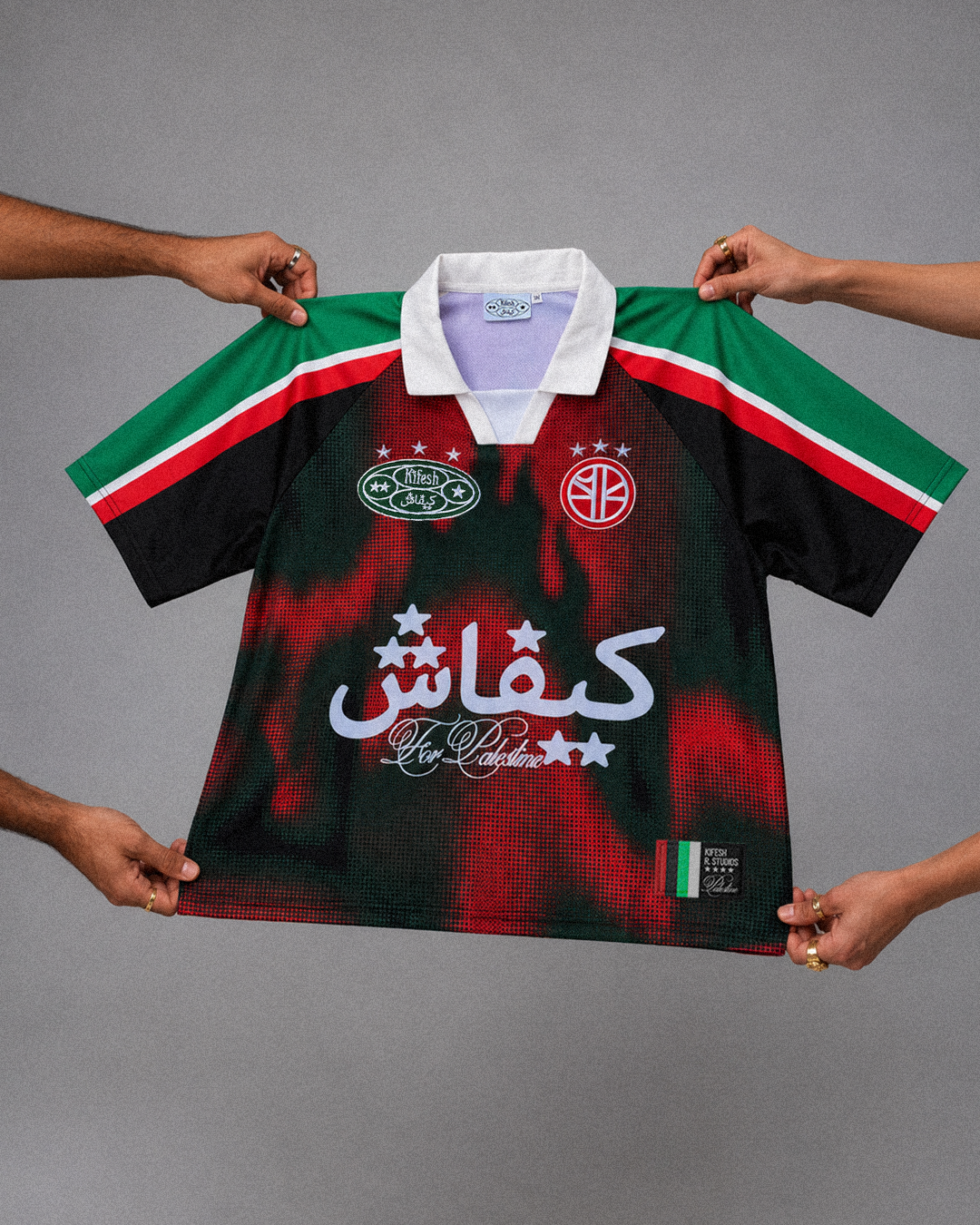
Kifesh has joined forces with Reverso Studios on a limited-edition Palestine jersey, with 100% of profits from the project going towards humanitarian causes providing direct aid. The general sale begins on 1 September, following an earlier pre-sale.
For Kifesh founder Sarah Amlal, the starting point was not simply to create a symbolic piece.
“Seeing everything happening in Gaza and the amount of suffering people are going through, I felt like I couldn’t just stand by and do nothing,” she explains. The question became how Kifesh could use both its platform and its community to contribute in a more tangible way.
That sense of community has been part of Kifesh since its beginnings.
The brand itself grew from Sarah’s experience of being a Moroccan woman raised in Belgium and questioning where she belonged. What began as a personal exploration of diaspora identity gradually became a wider space around belonging, self-expression and the possibility of carrying several identities at once.
“My Moroccan background is naturally part of everything I create,” she says. “It influences the way I see colour, culture, community and storytelling.”
Those ideas also informed the Palestine jersey.
Sarah developed the project with Peddro, the Brazilian founder of Reverso Studios, after discovering his work and connecting with his visual language. Together, they built a design in which the different elements carry specific intentions.
The colour palette references the Palestinian flag, while Arabic typography connects Sarah’s own roots with the Palestinian identity at the centre of the project. The different logos represent the people and studios involved in bringing the jersey to life.
Choosing a football shirt as the format was equally deliberate.
“Football shirts have always existed at the intersection of streetwear, identity and community,” Sarah explains. “People wear them to show where they come from, who they support and what they feel connected to.”
For her, that relationship between clothing and belonging made the jersey a particularly relevant object through which to express solidarity.
The collaboration also reflects a wider shift in how Sarah thinks about building Kifesh.
She has designed the brand’s clothing herself since the beginning, but increasingly sees creative collaboration as a way for independent designers and brands to strengthen each other.
Last year, Kifesh collaborated with Moroccan designer Salah Van Puymbroeck, based in Antwerp, after the two connected through shared cultural experiences. Sarah says that experience showed her how naturally ideas can develop when collaborators understand some of the same references without needing to constantly explain them.
“Instead of everyone trying to grow on their own, we can share ideas, skills and platforms and help strengthen the wider Moroccan and diaspora creative community together.”
That philosophy extends beyond fashion collaboration into the purpose of the Palestine jersey itself.
Sarah says one of her biggest concerns was ensuring the project did not use a serious humanitarian situation simply as an aesthetic or marketing narrative.
“For me, the most important thing is that the cause comes first,” she says. “The jersey needed to have a real purpose beyond the product itself.”
All profits will therefore be directed towards humanitarian support. Sarah says one of the organisations being supported is Karama Organization, a non-profit working with refugee women and children in refugee camps in the West Bank. She is also in direct contact with a Palestinian family helping channel aid locally and providing regular video updates on where the support is reaching.
That direct relationship is important to the way Sarah understands the project.
The jersey may operate visually through football, streetwear and identity, but its purpose is ultimately measured by what happens beyond the object.
For Kifesh, a brand that began by asking questions about belonging, the collaboration adds another dimension to that idea: belonging not only as identity, but as responsibility towards the communities and causes people choose to stand beside.
As Sarah puts it, “When people come together around something we believe in, we can create real impact.”
The Palestine jersey turns that belief into something wearable, but also into something intended to contribute beyond what is worn.
Photo : Kifesh