

IN CONVERSATION WITH KHALID NAITZEHOU
On craftsmanship, migration, and carrying Moroccan heritage through leatherwork
Some journeys begin with a business plan. Others begin in a workshop.
For Khalid, the story starts in Morocco, where he spent his summers as a young apprentice learning leatherwork alongside craftsmen much older than him. What began as a childhood apprenticeship would eventually become the foundation for a life-changing journey, taking him from a local workshop in Morocco to entrepreneurship in Los Angeles.
Today, through handmade leather goods and traditional craftsmanship, he continues to share Moroccan culture with an international audience while proving that heritage can travel, evolve, and remain deeply relevant.
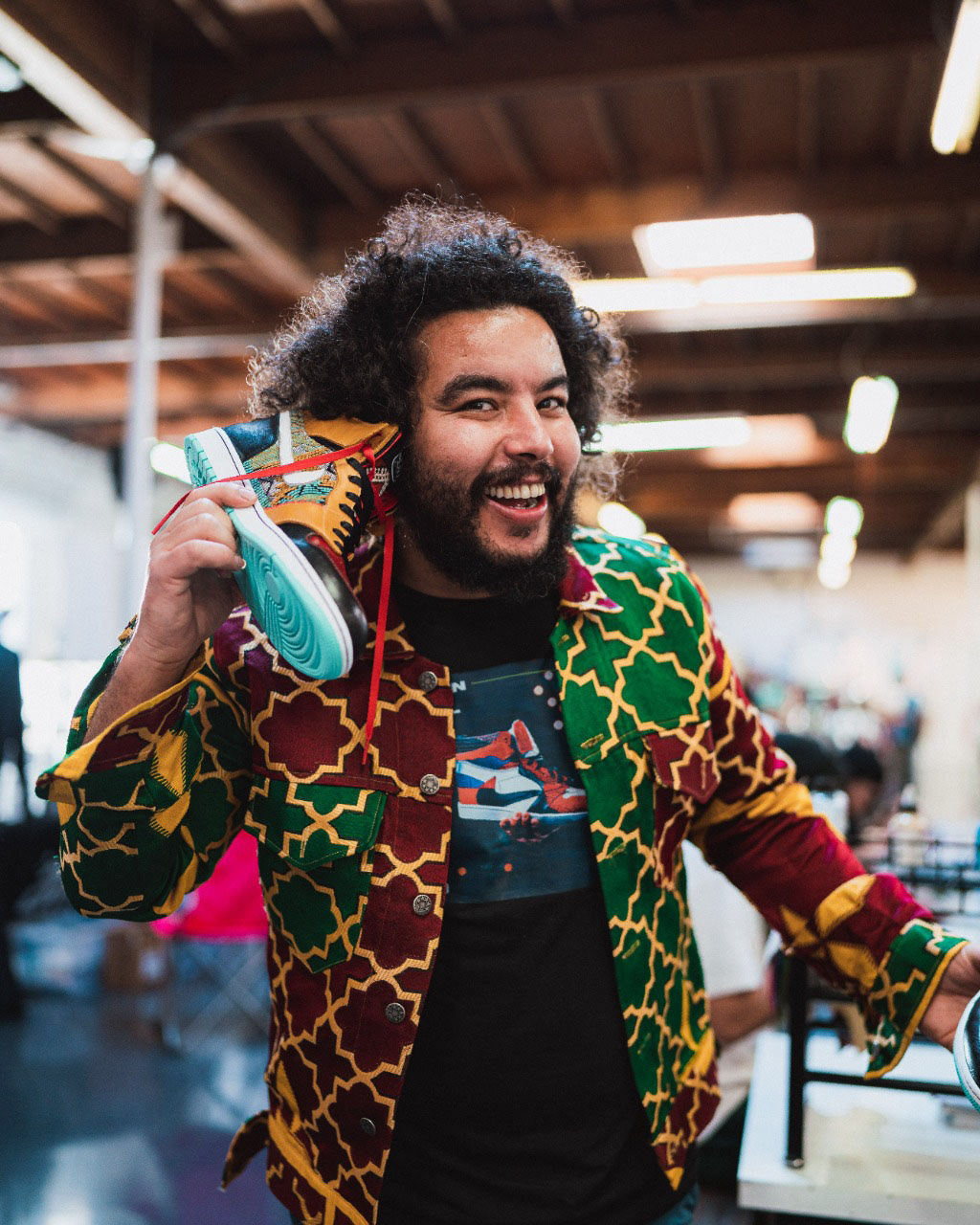
Learning the craft at a young age
Khalid's relationship with leatherwork began long before entrepreneurship entered the picture. As a child, summer holidays meant returning to the workshop, where learning happened through observation, repetition, and listening.
“I remember always looking forward to summer holidays so I could go work at the shop as an apprentice.”
Those early years were shaped not only by technical learning but also by observation and listening. Surrounded by older craftsmen, he absorbed knowledge through everyday conversations and shared experiences.
Alongside the work itself came the small moments that remain vivid today, from tea breaks to shared meals, memories that continue to define his connection to the craft.
“I remember our tea breaks and eating ‘thon ou lhror’ sandwiches together.”
Sharing Moroccan heritage through craftsmanship
Today, Khalid's leatherwork reaches an international audience from his shop at the Original Farmers Market in Los Angeles.
For him, every handmade object becomes an opportunity to introduce people to Moroccan culture and artisan traditions.
“Being there and sharing my leatherwork every day makes me feel like an ambassador of Morocco through craftsmanship.”
His work becomes more than a commercial activity, it becomes cultural storytelling.
“Through my work, people discover Moroccan culture, handmade traditions, and the beauty behind artisan work.”
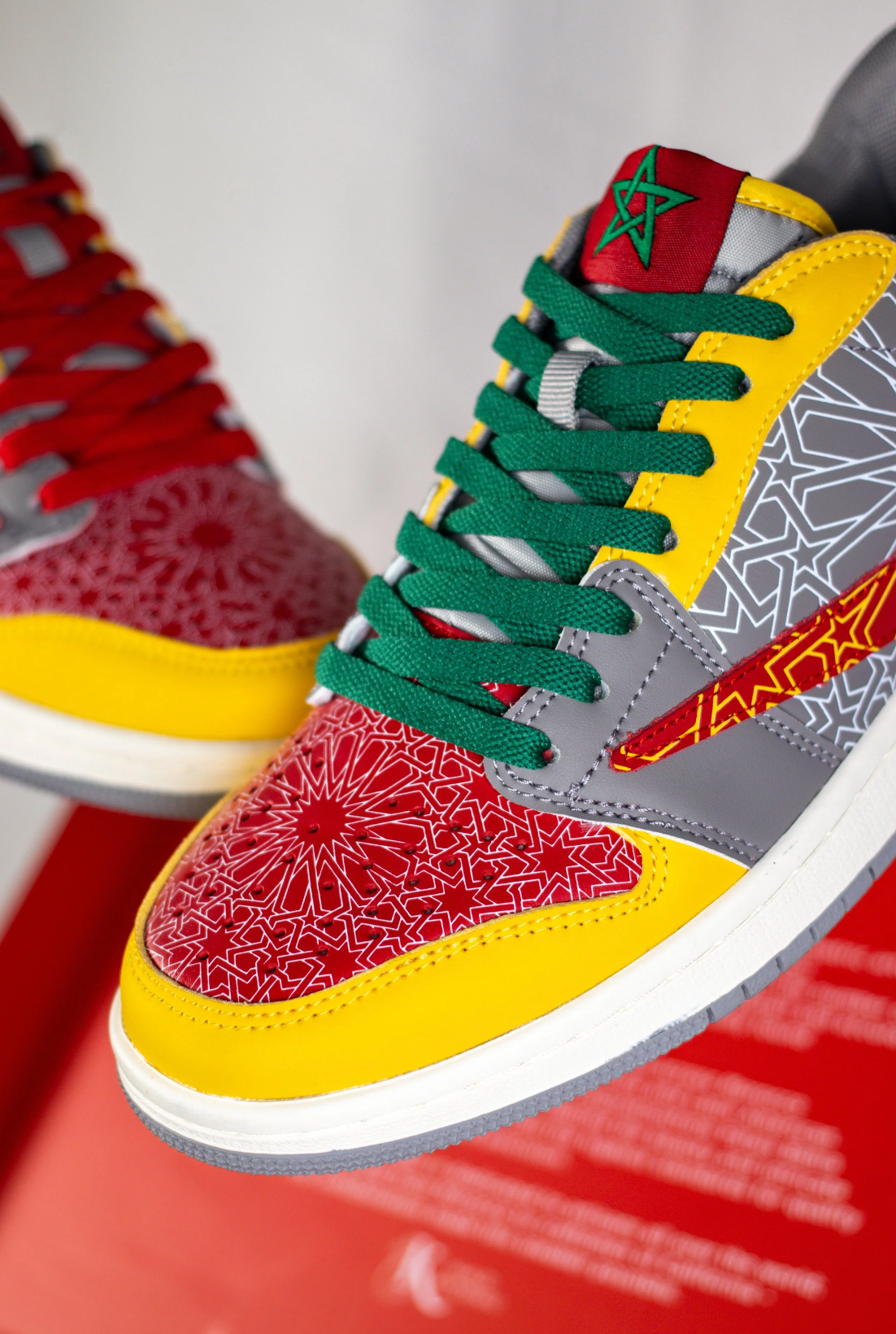
Beyond the object
When Khalid speaks about craftsmanship, he rarely focuses solely on products. What interests him most is the human dimension behind creation.
“Craftsmanship represents patience, identity, and human connection.”
For him, the value of handmade work lies in what it carries beyond function or aesthetics.
“A handmade piece carries energy, emotion, and the story of the person who made it.”
Craftsmanship becomes a way of preserving knowledge, transmitting culture, and creating emotional connections through objects.
From apprentice to entrepreneur
Looking back on his journey, Khalid's proudest moments are not necessarily tied to business success alone, but to what the craft made possible.
“This skill and labor as a cobbler helped me achieve my dream of going abroad for school.”
What started as an apprenticeship eventually became the foundation for a new life abroad.
“Later, it helped me build my dream as an entrepreneur in one of the most expensive cities in the world, Los Angeles.”
The path from workshop apprentice to business owner remains something he still reflects on with disbelief.
Starting over in a new country
Moving to the United States required learning far more than a new market. It meant becoming an entrepreneur from scratch.
“I had always been an apprentice and never owned or managed a business before.”
Suddenly, business management, communication, marketing, and administration became as important as craftsmanship itself.
“I had to learn everything while running the business at the same time.”
The experience challenged him, but also accelerated his growth in ways he never anticipated.
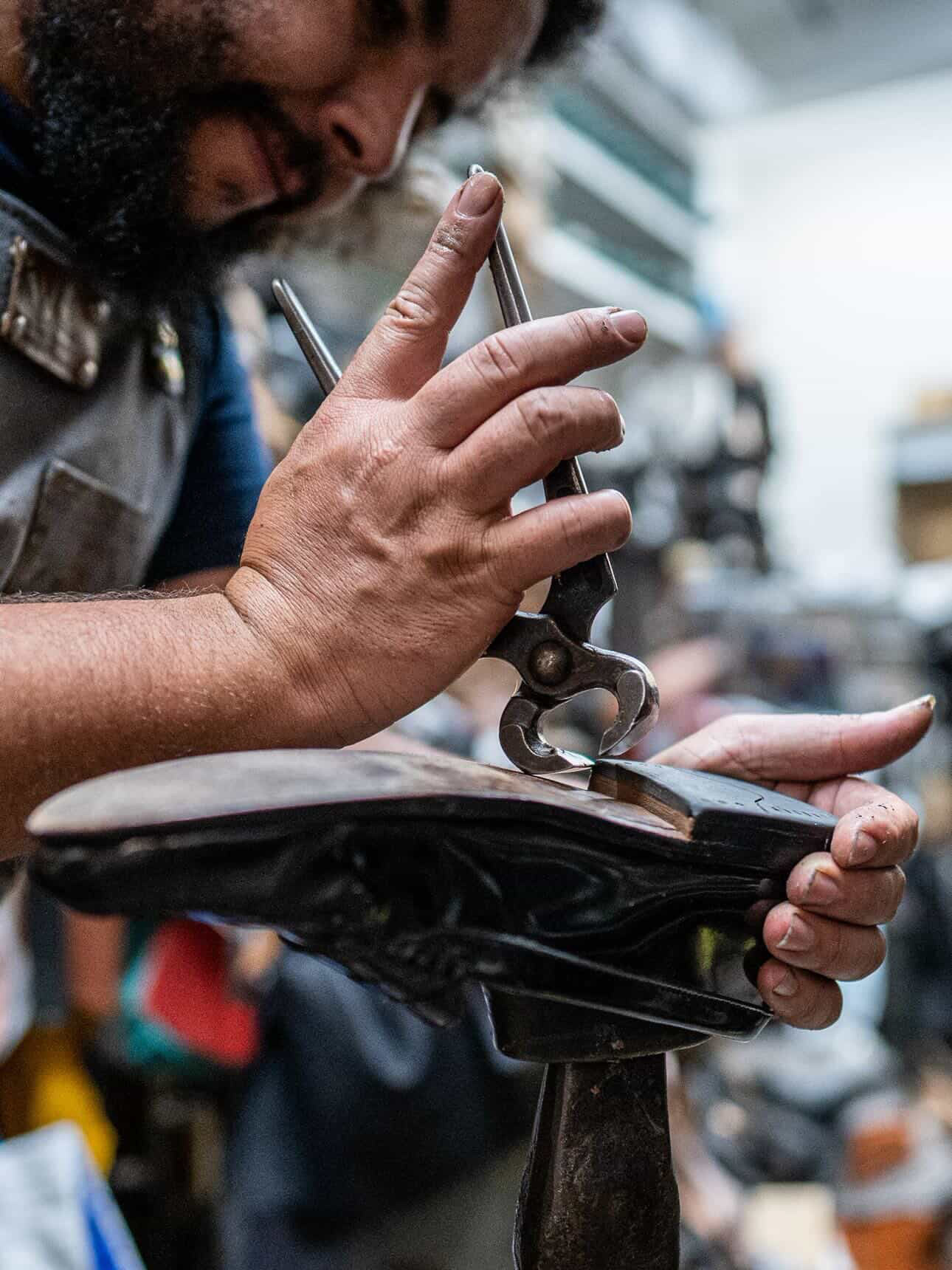
Finding inspiration
Morocco continues to shape Khalid's creative universe, even thousands of kilometers away from home.
“My house itself is very Moroccan-inspired, filled with fabrics, colors, textures, and shapes from Morocco.”
His surroundings constantly feed his imagination and creative process.
“I don’t have to look far for inspiration, it’s all around me every day.”
Travel also plays an important role, offering new perspectives while reinforcing his connection to his Moroccan roots.
Preserving heritage while evolving it
A recurring theme in Khalid's work is the balance between tradition and modernity.
Rather than treating heritage as something fixed, he sees it as a living resource that can continue evolving.
“I don’t believe heritage should stay frozen in the past.”
His approach is to reinterpret traditional techniques through contemporary design and storytelling.
“I like taking traditional techniques and reimagining them through contemporary design, fashion, and storytelling.”
The goal is not simply preservation, but relevance.
Why handmade still matters
In an era dominated by mass production, Khalid believes people are increasingly searching for authenticity.
“Customers don’t only want to see the final product on a shelf anymore.”
What matters today is understanding the process and the people behind the object.
“They want to know who made it, how it was made, and the human story behind it.”
For Khalid, this renewed appreciation for craftsmanship proves that handmade work continues to hold a unique place in contemporary culture.
Photos : Khalid Naitzehou