

IN CONVERSATION WITH JÉRÉMIE AZUELOS
On belonging, human connection, and learning to truly observe
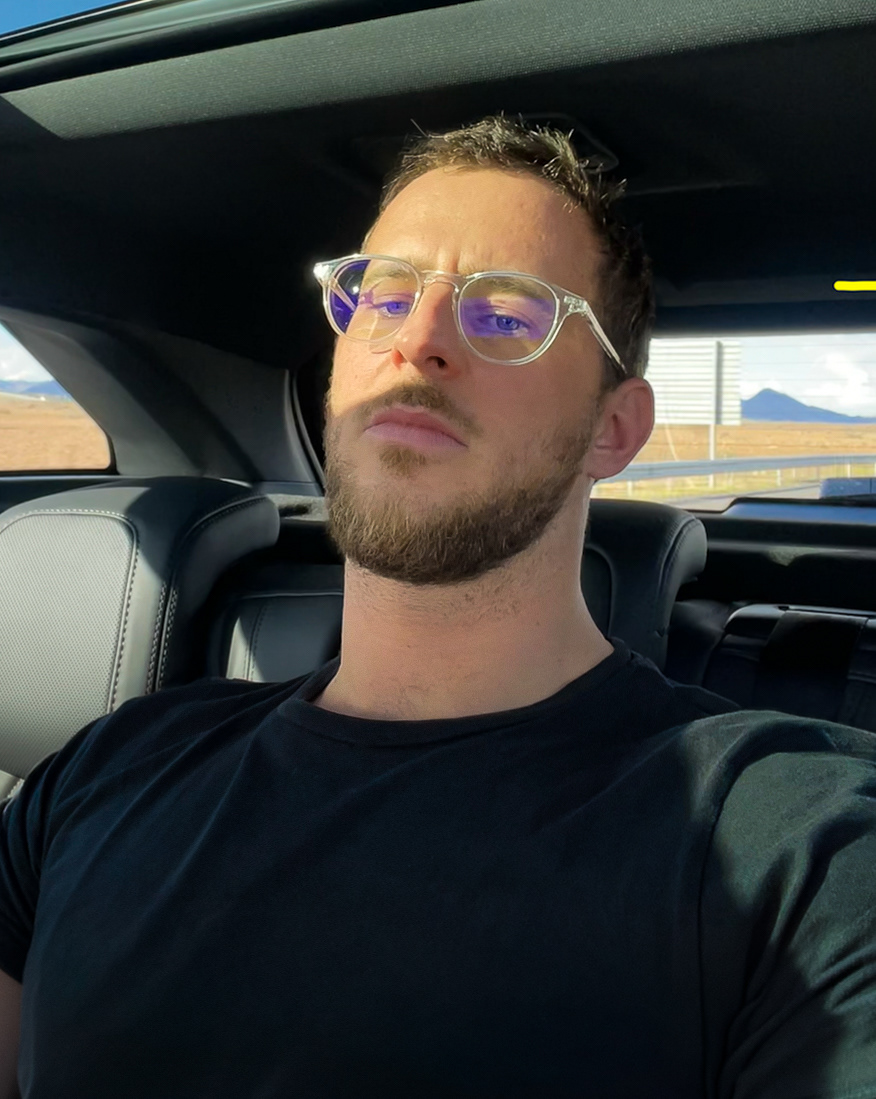
For Jérémie Azuelos, photography began almost casually, with an iPhone accompanying his travels. Yet the instinct behind it had existed much longer.
As a child, he drew and painted, paying close attention to light, perspective, expression and the details that make an image feel right. Years later, photography would bring him back to that same habit of slowing down and looking closely.
But his relationship with photography has gradually extended beyond image-making. Moving between Morocco, France and the different places he encounters through travel, Jérémie increasingly understands photography as a way to meet people, question assumptions and reconsider what it means to belong.
In this conversation with CULTIQ, he reflects on home as something created through connection, the reciprocity involved in photographing strangers, life in Mers Sultan, building visibility through Hands of Morocco, the people who form his growing series INTO YOU, and the tension between the need to constantly create and the need to sometimes step away.
Learning to observe before learning photography
Jérémie finds it difficult to identify one clear chain of events that made him the person he is today. Reconstructing those foundations, he suggests, can feel like assembling an unfamiliar puzzle with several pieces missing.
His first photographs were much like anyone else's, images taken on an iPhone while travelling. Only around three years before this conversation did he begin working seriously with what he considers his first proper camera, which still leaves him feeling relatively new to photography.
Long before cameras, however, there was drawing and painting.
As a child, Jérémie was fascinated by details. He wanted the light and perspective to feel right and expressions to be captured accurately. It was a standard he imposed on himself, but one accompanied by pleasure.
He hopes that drawing may eventually return to his life.
“Perhaps some things never really leave us. They simply wait for the right moment of life.”
Today, he recognises much of the same instinct in his photography and video work. For him, both drawing and photography have the ability to force someone back into the present.
“They make you slow down and truly observe.”
Observation becomes almost meditative, first through paying attention and later through the act of creating. Photography, from that perspective, became a natural continuation of something that had already begun much earlier.
Belonging through connection rather than geography
For someone whose identity sits between two cultures, Jérémie does not experience belonging as something fixed by birthplace or nationality.
Home, to him, is constantly capable of changing.
Photography has played an important role in that understanding because it continually encourages him to move beyond familiar surroundings. Each place creates the possibility of new conversations, encounters and things to learn.
Casablanca remains his hometown and, for now, his home. But he does not see that as necessarily permanent, nor does he believe another place would automatically be better or able to fulfil something Morocco cannot.
Instead, his understanding of home has gradually shifted away from geography.
“I came to believe that the feeling of belonging has less to do with a certain place and more with the connection that is made along the way.”
Having spent most of his life in Morocco, Jérémie says he has always felt at home there. At the same time, being around people from other cultures, or people whose beliefs and perspectives differ considerably from his own, has consistently enriched him.
Those encounters have also reinforced one of his broader beliefs about human relationships.
He is convinced that the way people respond to us, wherever we are, is partly shaped by what we bring into the interaction ourselves.
“The energy we give off, the way we approach people, and the openness we show definitely shape the kind of exchange we receive in return.”
Home, in that sense, becomes less a location than a quality of connection.
Street photography as an encounter
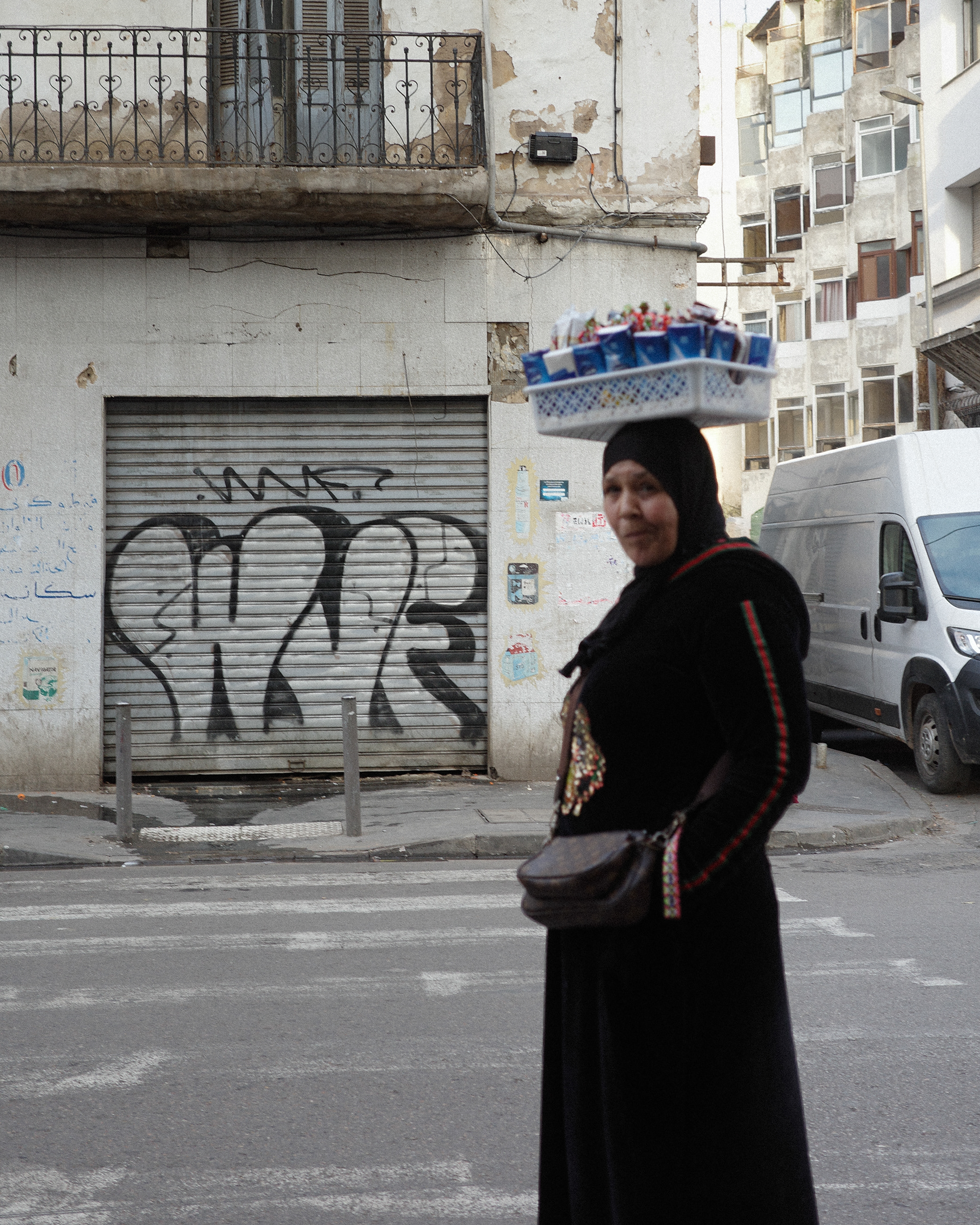
Jérémie Azuelos sees street photography as capable of revealing considerably more than an aesthetic moment.
It can act as a diagnostic tool, reflecting the ways politics, economics, fashion and education enter people's everyday lives.
When travelling, one ritual remains consistent: walking.
He likes to move through unfamiliar surroundings and allow his senses to compete over how much of the environment they can absorb.
It is something he recommends even to people who have no interest in photography.
Approaching someone unknown and creating even a simple exchange, he believes, can alter how a person sees and listens. It can create an unexpected opening onto the world around them.
“Going out, approaching people you don't know and creating a simple exchange can open unexpected doors onto the world around you.”
For Jérémie, this also requires freedom and courage.
Every neighbourhood he enters contains stories, with each person adding something to his evolving understanding of human nature.
The encounters have helped reinforce a conviction that difference does not eliminate commonality.
“There is no single right way of living.”
Across different lifestyles and circumstances, he continues to find familiar desires, sorrows and joys capable of connecting people to one another.
Reciprocity before perfection
Jérémie does not reject perfection.
The pursuit of it, he believes, can push creatives towards new approaches and greater attention. The problem appears when perfection becomes so dominant that the final image matters more than the process of creating it.
A photographer preoccupied with rigid technical rules can, in his view, end up producing images that feel disconnected from life.
His preference for empathy and presence became particularly clear through two difficult periods in his own life. He describes experiencing life during those periods in some of its rawest forms: chaotic, grotesque and rough, accompanied by a sense of lost hope and uncertainty about the way forward.
Coming through those experiences changed the way the world appeared to him.
Suddenly, even ordinary things could feel dramatically beautiful.
Yet he does not see perfection and empathy as opposites. The task is finding a personal balance between them.
“What matters most is what is happening in front of you.”
That philosophy extends beyond photography into the way Jérémie approaches people generally.
He describes himself as direct and straightforward, and believes strongly in reciprocity.
He does not feel the need to offer everyone exactly the same energy. When he feels openness returned, he responds with openness and generosity. When he does not, he becomes more guarded.
Those moments, however, are relatively rare.
“When you approach people with openness and sincerity from the start, I find that you tend to receive the same in return.”
For him, presence in photography begins with presence between people.
Understanding Mers Sultan from within
Mers Sultan is not simply one of Jérémie's photographic subjects. It is the neighbourhood he chose to inhabit.
He sees Casablanca broadly, and Mers Sultan particularly, as places shaped by continual social and artistic change.
The neighbourhood's predominantly Art Deco architecture carries traces of the French Protectorate, while Moroccan life has continued to transform those spaces since independence.
For Jérémie, this coexistence makes Mers Sultan impossible to reduce to one fixed story.
“Every minute carries many stories that scream for our attention.”
Living there continually exposes him to both the richness of its history and the realities of everyday struggle.
He sees the neighbourhood as a place where aspects of Morocco's cultural evolution can be observed directly, but believes they cannot be properly understood at a distance.
Understanding requires proximity.
It requires engaging with a place where history, the present and the possibilities of tomorrow continually meet.
Making visibility less hierarchical
Hands of Morocco began partly through another project.
Jérémie Azuelos encountered Hands of Paris, itself influenced by New York's Subway Hands, and felt that a similar visual conversation belonged in Morocco.
The hand seemed particularly appropriate.
Hands communicate emotion, gesture and relationships. They can also express resistance, while revealing aspects of culture indirectly rather than explaining them literally.
But Hands of Morocco gradually became more than a thematic collection.
What interests Jérémie particularly is its absence of hierarchy.
“I love the fact that there is no hierarchy between artists.”
A photographer taking their first steps can appear alongside someone with an established international reputation. The determining factor is not professional status but whether the photograph can hold meaning and a life of its own.
Jérémie wanted that openness from the beginning.
For a photographer at an early stage, being placed within such a visual conversation can itself become encouragement.
“Everyone deserves a chance to be seen.”
His role, as he understands it, is partly to keep looking for images and perspectives he finds meaningful enough to bring into that shared space.
A map made of faces
The moving portraits Jérémie has accumulated through Morocco and his travels form another kind of archive.
He thinks of the collection as a personal map.
But rather than landmarks, landscapes or monuments, this map is built from faces, conversations, interactions and the bonds created with strangers.
The collection also reflects his evolution as an artist.
Each moving frame captures a human experience that, for him, does not need to be enclosed within the walls of a gallery to have artistic value.
Because of how personally he feels about them, he made the portraits available through Instagram Highlights.
He named the series INTO YOU.
“It’s a window into many beautiful souls that still breathe life into my existence.”
Looking back, Jérémie feels that some of those moments captured something more elusive than appearance.
“I realised that I had captured, as ambitious as that may sound, a little glimpse of their soul.”
That freedom also extends to his broader practice.
He does not want to reduce himself to a single photographic category. Street photography, portraiture, travel and fashion can all coexist within the same creative identity.
The continuity lies less in genre than in the instinct to keep observing and encountering.
When creating becomes difficult to switch off
Photography has altered the way Jérémie relates to strangers.
Human beings, he argues, are capable of constructing assumptions that may have little connection to reality, while still allowing those assumptions to shape behaviour and perception.
Photography has encouraged him to interrupt that instinct.
He has become more willing to approach strangers with an attentiveness similar to what he might ordinarily reserve for someone close to him.
For Jérémie, those encounters help him discover the world, understand something more about human nature and continue creating meaningful work.
But photography has also revealed something more complicated about his relationship with creation itself.
He sometimes feels almost addicted to making things.
There is a constant desire to create, explore and return to his archives in search of something that can be brought forward.
He experiences things intensely. That intensity can become a creative strength, but it can also overwhelm him.
Perfectionism may be part of it, particularly what he describes as a visceral need to keep improving, exploring and producing.
He is still learning how to live with that impulse without allowing it to consume him, while remaining conscious that there are parts of life he does not want to miss in the process.
“Sometimes I wonder whether the need to keep creating can itself become a kind of trap.”
Perhaps, he suggests, creativity cannot answer every question.
Sometimes stepping away may be necessary to understand what one actually needs, rather than continually trying to create a way through everything.
Photos : Jérémie Azuelos