

How Youssef Mourahab won Morocco's first dance world cup gold
How self-taught dancer Youssef Mourahab transformed a deeply personal performance into a historic victory for Morocco in Dublin
How self-taught dancer Youssef Mourahab transformed a deeply personal performance into a historic victory for Morocco in Dublin
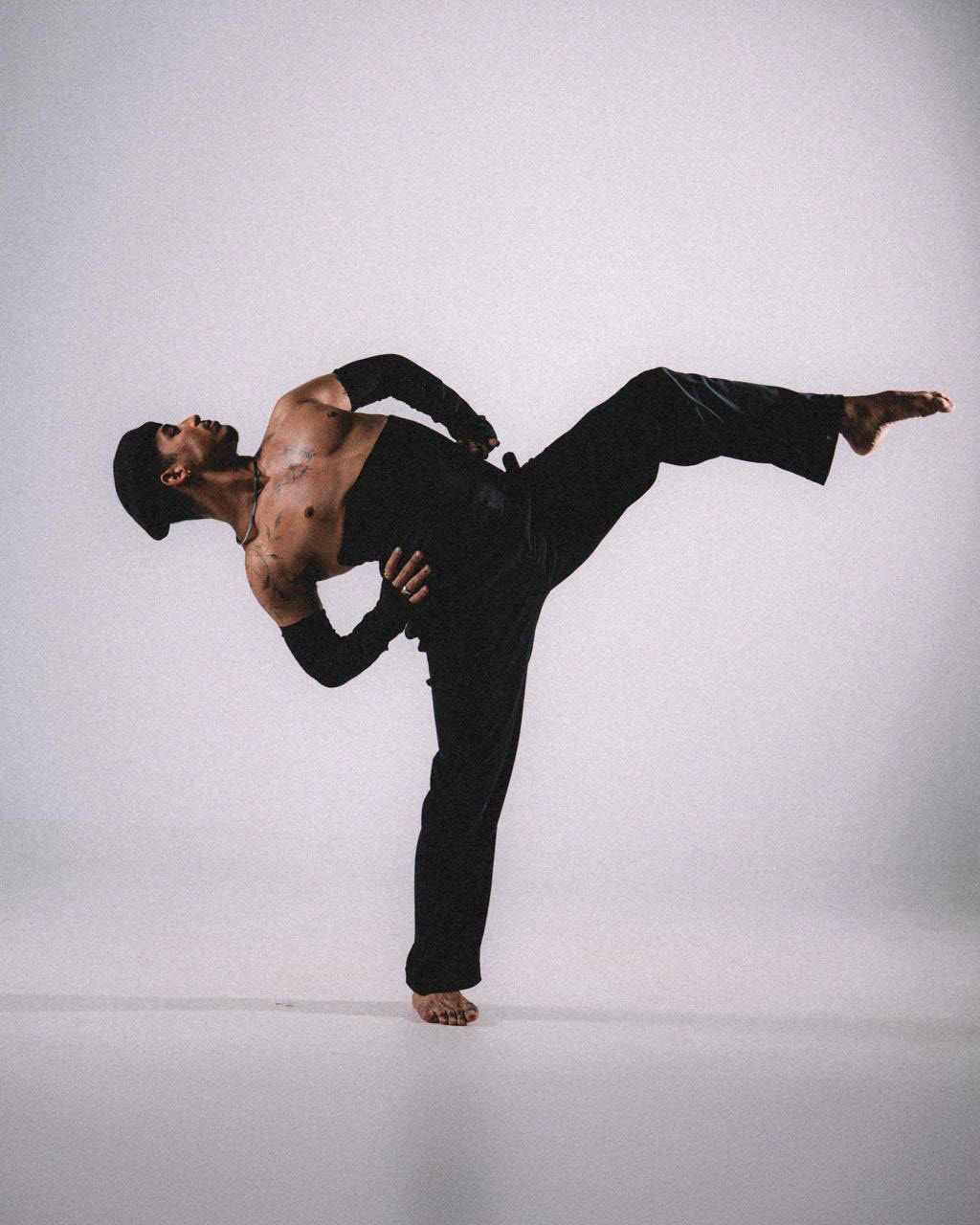
When Youssef Mourahab stood on the podium in Dublin and heard the Moroccan national anthem, the moment carried more than the weight of an individual victory.
Representing Temps’Danse, the Moroccan dancer had just placed first in the Senior Solo Showstopper category at the Dance World Cup. His performance received 90.9 points, the highest score in the category, bringing Morocco its first gold medal in the competition’s history.
For Mourahab, it was also the result of a journey that had begun only a few years earlier, far from the setting of an international dance competition.
He started dancing in 2019 as a self-taught artist, developing his practice through freestyle dance battles in Morocco. His first foundations came from popping and hip-hop, before he gradually began exploring contemporary dance and expanding the range of movement available to him.
From the beginning, he was less interested in remaining within the boundaries of one discipline than in finding a physical language that felt personal. Contemporary dance, hip-hop, voguing, jazz and street jazz eventually became part of the same vocabulary.
“I’ve always loved blending different styles to create my own movement language,” he explains.
That language became central to the performance he presented in Dublin.
Although Mourahab had previously participated in freestyle battles across Morocco, the Dance World Cup was his first international competition. For the first time, he found himself competing alongside dancers from England, Canada, Spain, Portugal and many other countries.
The shift was significant. He was not only entering a larger competition, but also travelling abroad alone for the first time to represent Morocco on a world stage.
The pressure was therefore both physical and mental.
In preparation, Mourahab trained consistently, focusing on his endurance, cardio and flexibility while continuing to refine every detail of the choreography. The work demanded technical precision, but the mental preparation was equally important. He needed to trust his abilities, remain committed to his artistic vision and manage the pressure of carrying a personal performance into an unfamiliar international environment.
“I focused on trusting myself and staying fully committed to my vision,” he says
The performance that ultimately won the gold medal was rooted in a difficult and intimate period of his life.
Mourahab had experienced a time when he felt that becoming stronger required him to disconnect from his emotions. Allowing himself to feel had become associated with weakness, and the choreography grew from that internal conflict.
During the piece, he removes his heart and transforms into another version of himself. The gesture becomes the central image of the performance, representing the decision to separate himself from emotion in order to construct a different form of strength.
“The performance is deeply personal,” he explains. “It’s inspired by a period in my life when I felt I had to disconnect from my emotions in order to become stronger, because whenever I allowed myself to feel, I saw it as a weakness.”
Rather than explaining this experience through speech, he chose to communicate it through the body. The fusion of styles was not used as a display of variety, but as a way to express the different emotional states contained within the story.
The result placed his personal experience at the centre of a performance seen and evaluated on an international stage.
Winning the Senior Solo Showstopper category was difficult for Mourahab to describe in words. The medal represented the discipline behind the choreography, the pressure of competing internationally for the first time and the vulnerability required to present such a personal story through movement.
But the moment that stayed with him most strongly came after the performance.
“Hearing the Moroccan national anthem while standing on the podium in Dublin was one of the proudest moments of my life,” he says. “Representing Morocco with such pride and bringing home a gold medal is something I’ll never forget.”
His presence at the Dance World Cup extended beyond his own solo performance.
Mourahab also participated as a choreographer for students from Temps’Danse, the school that supported him throughout the journey. The group competed in the Large Group Commercial category and finished among the global Top 10, alongside dozens of other participating groups.
This meant that he represented Morocco in two different roles: as a dancer developing and presenting his own artistic language, and as a choreographer guiding other performers onto the same international stage.
“It was an honour to represent Morocco not only as a dancer but also as a choreographer,” he says.
His victory in Dublin did not begin with an international institution or a conventional dance pathway. It began in Morocco’s freestyle battle scene, through independent learning, experimentation and the gradual discovery of a movement language that could hold several styles at once.
What reached the podium was not only a technically prepared performance. It was a personal story shaped through contemporary dance, hip-hop, voguing, jazz and street jazz, carried by a dancer who chose to trust the language he had built for himself.
Morocco’s first Dance World Cup gold emerged from that combination of discipline, vulnerability and self-definition.
For Youssef Mourahab, the victory marked his first international competition. For Morocco, it marked the first time its anthem was heard from the highest step of the Dance World Cup podium.
Photos : Youssef Mourahab