

IN CONVERSATION WITH HICHAM LAHLOU
On Moroccan design, living heritage, and creating space for the next generation
For Hicham Lahlou, design has never been only about objects. It is also about the spaces people inhabit, the experiences they have within them, and the relationship between creativity and everyday life.
Over the course of his career, the Moroccan designer and interior architect has worked across objects, interiors and public environments, while contributing to wider conversations about the place of Moroccan and African design on the international stage. Yet behind the titles of pioneer and ambassador is someone who continues to find meaning in the act of creating itself.
His perspective also challenges a familiar narrative about the development of design in Morocco. When Hicham returned to the country in the 1990s, creativity and craftsmanship were already deeply embedded in its cultural landscape. What was missing, he explains, was not talent but the infrastructure needed to establish contemporary design as an independent discipline and industry.
Today, he sees a different challenge emerging. As Morocco's design market develops and new generations bring environmental, social and technological questions into their practice, the conversation is shifting from establishing legitimacy to imagining what comes next.In this conversation with CULTIQ, Hicham Lahlou reflects on his creative motivations, the distinction between heritage and decoration, the importance of design in public life, and what he hopes future generations will inherit, question and reinvent.

Creating with emotion and purpose
After decades of work and international recognition, Hicham's relationship with creation remains rooted in the instincts that first drew him to design.
Interior architecture occupies a fundamental place in his identity. It allows him to think about design at the scale of everyday life, considering the interaction between volumes, light, materials, movement and the people who inhabit a space.
His interest extends equally to the object and to the environment surrounding it. What matters is the ability to guide an idea towards something that carries meaning in people's lives.
“Today, what drives me to create is the search for a sense of essential truth, alongside the joy of guiding an idea into becoming a space or an object that brings real meaning to people’s everyday lives.”
With experience, his motivations have also evolved. Recognition and the need to establish himself are no longer central concerns. He is more interested in the relationship between emotion, purpose and functionality, and in creating work that can communicate something without losing its precision.
“I am no longer searching to prove anything; rather, I aim to convey emotion and purpose, continuing to conceive spaces and designs that tell a story while remaining functional, precise, and poetic.”
The challenge was never a lack of creativity
Hicham is careful to distinguish between the existence of design in Morocco and the development of design as an independent profession.
When he returned in the 1990s, Morocco already possessed a rich culture of architecture, craftsmanship, applied arts and ways of living. Architects and interior architects were producing custom furniture, lighting, joinery and architectural details, often drawing on traditional techniques with considerable sensitivity.
What the country lacked was a structured ecosystem capable of supporting contemporary design as an industry in its own right.
“The real challenge upon my return in the 90s was not a lack of creativity, but the absence of a structured ecosystem for design as an independent discipline and industry.”
There was little infrastructure for the industrial production of contemporary design objects, limited awareness of design's economic potential, and few manufacturers equipped to support the sector.
Establishing the profession therefore involved much more than creating individual projects. It required advocacy, relationships between creative and industrial actors, and efforts to demonstrate design's relevance to economic development.
For Hicham, that history matters because it should not have to repeat itself.
“What I hope for today's younger generation is that they no longer have to fight this battle for legitimacy.”
He hopes emerging designers will find an environment supported by specialised education, funding, manufacturers and institutions, allowing them to concentrate on experimentation, innovation and the development of their own creative language.
Heritage as a living design language
Moroccan heritage offers an extraordinary range of references for contemporary designers. But Hicham believes the value of those references depends on how deeply they are understood.
Simply applying a traditional pattern or recognisable architectural element to an object does not necessarily produce meaningful contemporary design.
For him, the distinction lies between borrowing an aesthetic and understanding the principles that produced it.
A zellige motif, for example, can be used decoratively without engaging with an object's function, ergonomics, structure or manufacturing process. The result may be visually appealing, but it remains superficial.
“A cultural reference becomes a genuine contemporary language when it is absorbed, reinterpreted, and reinvented.”
Meaningful reinterpretation requires an understanding of craftsmanship, proportions, spatial thinking and the treatment of light. These principles can then be translated through contemporary materials, technologies and changing ways of living.
Rather than treating tradition as a collection of visual symbols to reproduce, Hicham sees it as a source of knowledge capable of generating new ideas.
“Heritage should not be a static museum piece to gaze upon; it must be a living, breathing foundation.”
Design belongs in everyday life
Hicham's vision of a well-designed Morocco extends beyond galleries, private interiors and collectible objects.
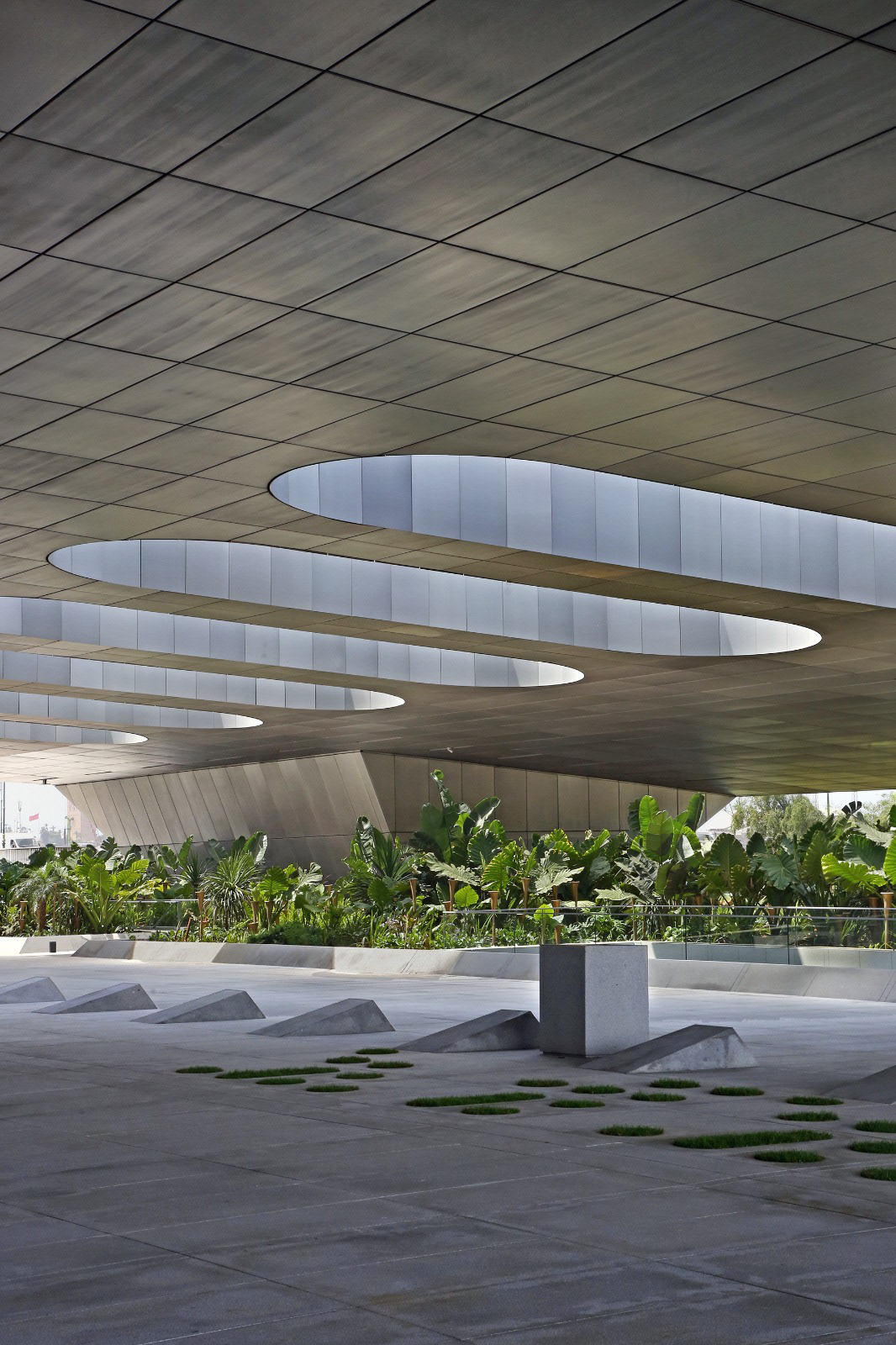
He imagines a country where design and interior architecture contribute equally to the quality of public life.
That means considering how people experience ordinary activities: taking public transport, waiting at a station, walking through a city or entering a public institution.
The quality of these spaces can influence comfort, movement, accessibility and the way people feel within their surroundings.
For Hicham, design should bring dignity and consideration to these everyday experiences.
“Design and spatial planning are not luxuries reserved for an elite; they are tools for social well-being and civic cohesion.”
His argument places the user at the centre of the design process. Beauty matters, but so do functionality, ergonomics and respect for the people who interact with a space.
A well-designed public environment can contribute to a shared sense of pride and belonging, making design relevant far beyond the creative professions.
Building an ecosystem, not only a career
For Hicham, the responsibility to support other designers emerged naturally as his own career developed.
Individual success, he argues, has limited meaning if it does not contribute to the wider development of a creative field.
“My personal success would have meant very little if it hadn't served to pave the way and build a framework for future generations.”
He also challenges the perception that Morocco still lacks a design market.
In his view, the sector has become dynamic and varied, encompassing design agencies, interior architecture practices, digital design and a growing number of contemporary brands working with artisans.
Craftsmanship is particularly important to this landscape. Hicham points to its economic weight, describing a sector representing nearly 7% of Morocco's GDP and employing around two million people.
He also sees major national development projects, including preparations for the 2030 FIFA World Cup, as an opportunity to connect the country's creative expertise with investment in hospitality, infrastructure and public spaces.
For him, the question is not simply whether Morocco can build or renovate on a large scale. It is whether Moroccan designers, interior architects and artisans will participate meaningfully in that transformation.
“For me, creating the conditions for others means ensuring that this immense economic and cultural momentum directly benefits our native talent, design practices, and artisans—building the modern Morocco together.”
What younger designers are teaching him
While Hicham hopes to pass experience and opportunities to emerging creatives, he also sees younger generations as an important source of learning.
What strikes him is their ability to connect creative decisions with broader environmental, social and technological questions.
Rather than approaching an object or interior as an isolated design exercise, younger practitioners increasingly consider the origins of materials, ecological impact, circularity and relationships with communities.
“The younger generation approaches creation with an incredibly acute environmental, social, and technological consciousness.”
He is equally interested in their comfort with digital tools and their ability to move between disciplines, from physical product design to digital experiences and UX/UI.
But the change is not only technological.
Hicham sees a generation that is increasingly confident in expressing cultural identity without treating it as a limitation. Young designers can participate in international creative conversations while remaining connected to their own cultural backgrounds.
Their willingness to experiment, question established approaches and move between different fields continues to influence his own thinking.
“This agility, spontaneity, and renewed purpose constantly challenge and enrich my own practice.”
What technology cannot replace
Artificial intelligence and digital technologies have expanded the tools available to designers and interior architects.
Hicham recognises their value, particularly in research, 3D modelling and visual exploration. These tools can accelerate processes and open up new possibilities.
Yet he draws a distinction between generating an image and understanding the human experience of a space.
“Technological tools and AI are fantastic accelerators for research, 3D modeling, and visual exploration, but they can never replace human sensibility, lived experience, and empathy.”
For him, designing involves sensory, emotional and cultural knowledge that cannot be reduced to a visual result.
The texture of a material, the movement of natural light through a room and the emotional character of a space all require human interpretation.
This is why he believes emerging designers must continue developing their intuition, judgement, cultural understanding and ethical awareness alongside technical skills.
Technology may help generate possibilities, but the ability to question those possibilities and decide what matters remains fundamental to creative practice.
A legacy meant to be challenged
When Hicham considers what future Moroccan designers might inherit from his generation, he thinks first about determination.
He hopes they will recognise the persistence required to establish design and interior architecture as respected professions, and understand the work involved in connecting creativity with wider economic and cultural development.
But he does not want that history to become a set of rules that younger creatives feel obliged to preserve.
Instead, he hopes they will have the confidence to challenge the very frameworks his generation helped establish.
“At the same time, I hope they have the audacity to push far beyond what we did: to disrupt the codes we established, to boldly experiment with emerging technologies and innovative materials, to reinvent production models, and to champion an uninhibited creative vision fully tuned to the ecological, social, and human challenges of their era.”
It is a vision of creative legacy that depends not on repetition, but on progress.
For Hicham, the next generation's role is not simply to continue the story of Moroccan design. It is to take that story somewhere his own generation could not yet imagine.
As he puts it: “Design Drives Innovation”.
Photo 1 : Ismail Afaiyss
Photos : Hicham Lahlou
Photos : Hicham Lahlou