

Diptyk Summer Issue #76 Explores Moroccan Contemporary Art and the “Long Game”
With Summer Issue #76, Diptyk turns to the artists, institutions and cultural narratives built through time, while reflecting on its own role in documenting a rapidly evolving art scene.
With Summer Issue #76, Diptyk turns to the artists, institutions and cultural narratives built through time, while reflecting on its own role in documenting a rapidly evolving art scene.
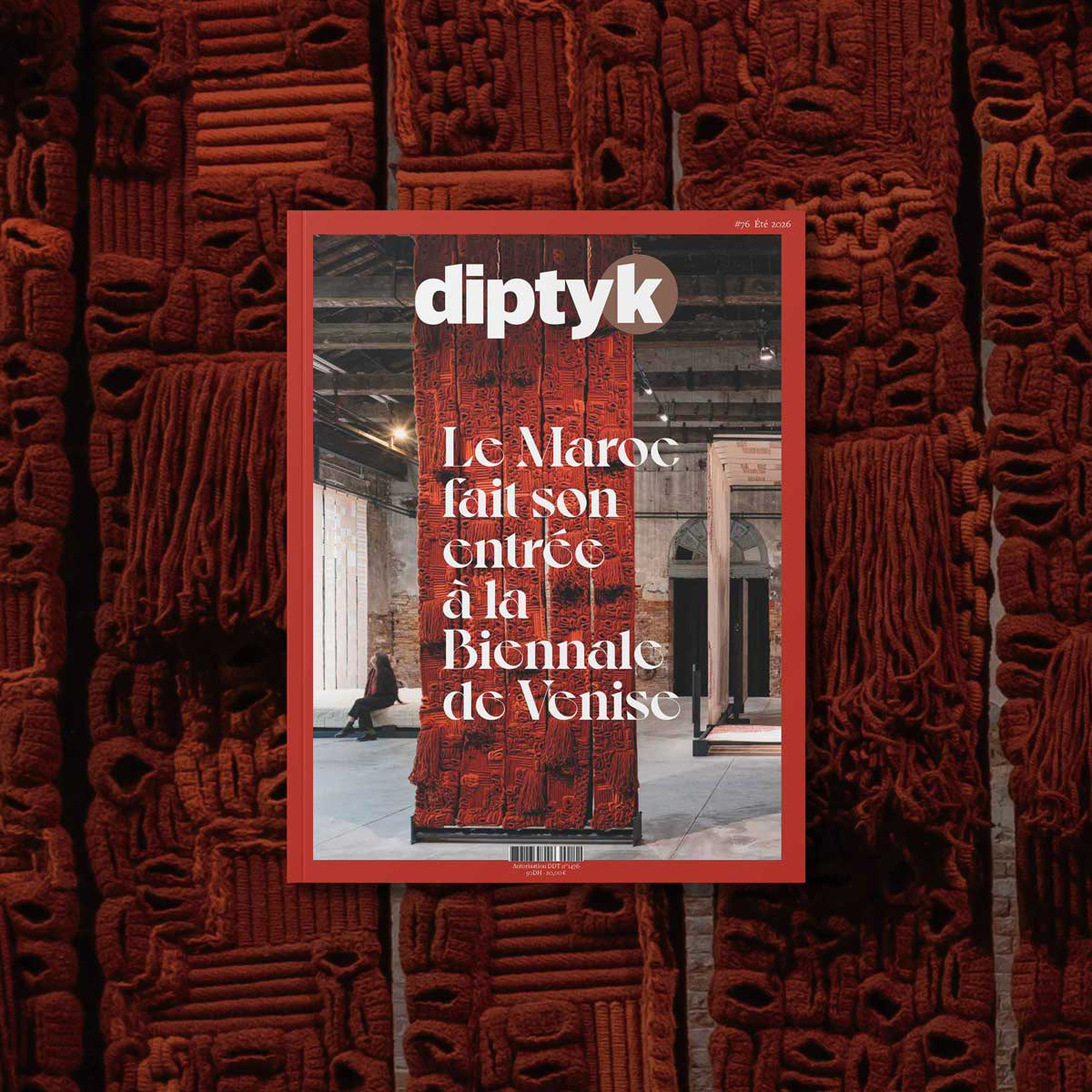
Founded in 2009, Diptyk began with a clear ambition: to give Arab and African art scenes the same serious and independent critical coverage afforded to other art ecosystems. Seventeen years and 76 issues later, the Casablanca-based publication sees its role as extending beyond the pages of a magazine.
Through its coverage of artists, exhibitions, galleries, collectors and institutions, Diptyk has worked to create a shared space for the different actors shaping contemporary art, while simultaneously building something intended to outlast the immediacy of cultural news.
“We are trying to build an archive that will allow future generations to read this moment,” the Diptyk team tells CULTIQ.
That ambition feels particularly relevant to the publication today. Moroccan contemporary art is receiving increasing international visibility, but Diptyk points to a tension accompanying that momentum: recognition can sometimes advance faster than the critical infrastructure needed to document, contextualise and question it.
Summer Issue #76 responds to that moment through an editorial thread Diptyk calls “the revenge of the long game.”
At its centre is a deceptively simple question: What does the long game look like, and who gets to tell it?
The cover offers one answer through Amina Agueznay’s Asǝṭṭa, presented as part of Morocco’s entry into the Venice Biennale. While such international visibility can appear to mark a singular moment, the work itself carries a much longer history, emerging from three decades of dialogue between Agueznay and master weavers from across Morocco.
The same attention to time runs through the issue’s exploration of Galerie Nadar. Presented by Diptyk as the first modern art gallery opened by an Arab woman in the Arab world, its story looks back at fifty years of quietly contributing to an art scene, one artist and one collector at a time.
Together, these stories shift attention away from sudden recognition and towards the years of practice, relationships, knowledge and cultural infrastructure that often precede it.
But Issue #76 also raises a larger question about how Moroccan art history itself is being constructed.
As Moroccan artists and institutions become increasingly visible internationally, Diptyk examines what it means to write that history at a moment when narratives long shaped through Western frameworks are increasingly being challenged from within.
For a publication, that also means thinking carefully about how those conversations reach readers.
Diptyk has deliberately kept its website free, making its coverage accessible whether the reader is, as the team puts it, “a student in Casablanca or a curator in Lagos.” Around the print magazine, it has developed a wider ecosystem that includes its website, newsletter, Instagram and podcast, each offering a different entry point into contemporary art.
The magazine allows readers to spend time with a subject. Digital platforms enable everyday discovery. Social media can provide the first encounter, while podcasts create room for conversations that require more time.
Yet Diptyk draws an important distinction between making art accessible and making it simpler.
“Simplification is not accessibility. It’s a betrayal of the subject and of the reader,” the team explains. “Accessibility means finding the right entry point into a complex subject and trusting the reader to go further.”
That position is particularly directed towards younger audiences. Diptyk describes Moroccan youth as among its most demanding readers, curious, internationally connected and quick to recognise when cultural conversations have been diluted rather than explained.
In that sense, the long game extends beyond the artists featured in Issue #76.
It also describes the work of cultural publishing itself.
Exhibitions close, international attention moves elsewhere, and the subjects dominating cultural conversations inevitably change. What remains are the works, the relationships they created, and the records through which future audiences will try to understand them.
After 17 years, Diptyk is continuing to build one of those records, documenting Moroccan contemporary art not only when it becomes visible, but while its history is still being written.
Photos : Diptyk