
IN CONVERSATION WITH AHMED ABOULANOUAR
On healing, vulnerability, and finding freedom through art
Ahmed Aboulanouar's work often feels intensely personal, yet rarely asks viewers to understand his story before responding to it. Working across painting, sculpture and installation, the Moroccan artist transforms memory, trauma and emotion into works that invite interpretation rather than explanation.
His practice began unexpectedly during the isolation of the COVID-19 pandemic, but what started as a way to escape boredom gradually became something much deeper. Today, his work explores vulnerability, contradiction and healing, while constantly asking whether art can ever fully resolve the experiences that created it.
In this conversation, Aboulanouar reflects on the relationship between creation and trauma, why he deliberately leaves his work open to interpretation, and the question that continues to shape everything he makes.
When boredom became the beginning
Aboulanouar never imagined becoming an artist. It was the stillness of the pandemic that unexpectedly redirected his life. With the world suddenly paused, he found himself searching for a way to occupy both his time and his mind.
Drawing and painting became that outlet, allowing memories and emotions to surface naturally through the act of making.
"COVID left me wondering, 'What on earth do I do now?' I started drawing and painting, weaponising my boredom by mixing it with my memories and emotions."
What began as an answer to boredom slowly evolved into an artistic language that continues to define his practice today.
Creating as a way of confronting trauma
Although his work moves between painting, sculpture and installation, Aboulanouar doesn't see these as separate disciplines. Instead, they are different ways of expressing the same emotional landscape.
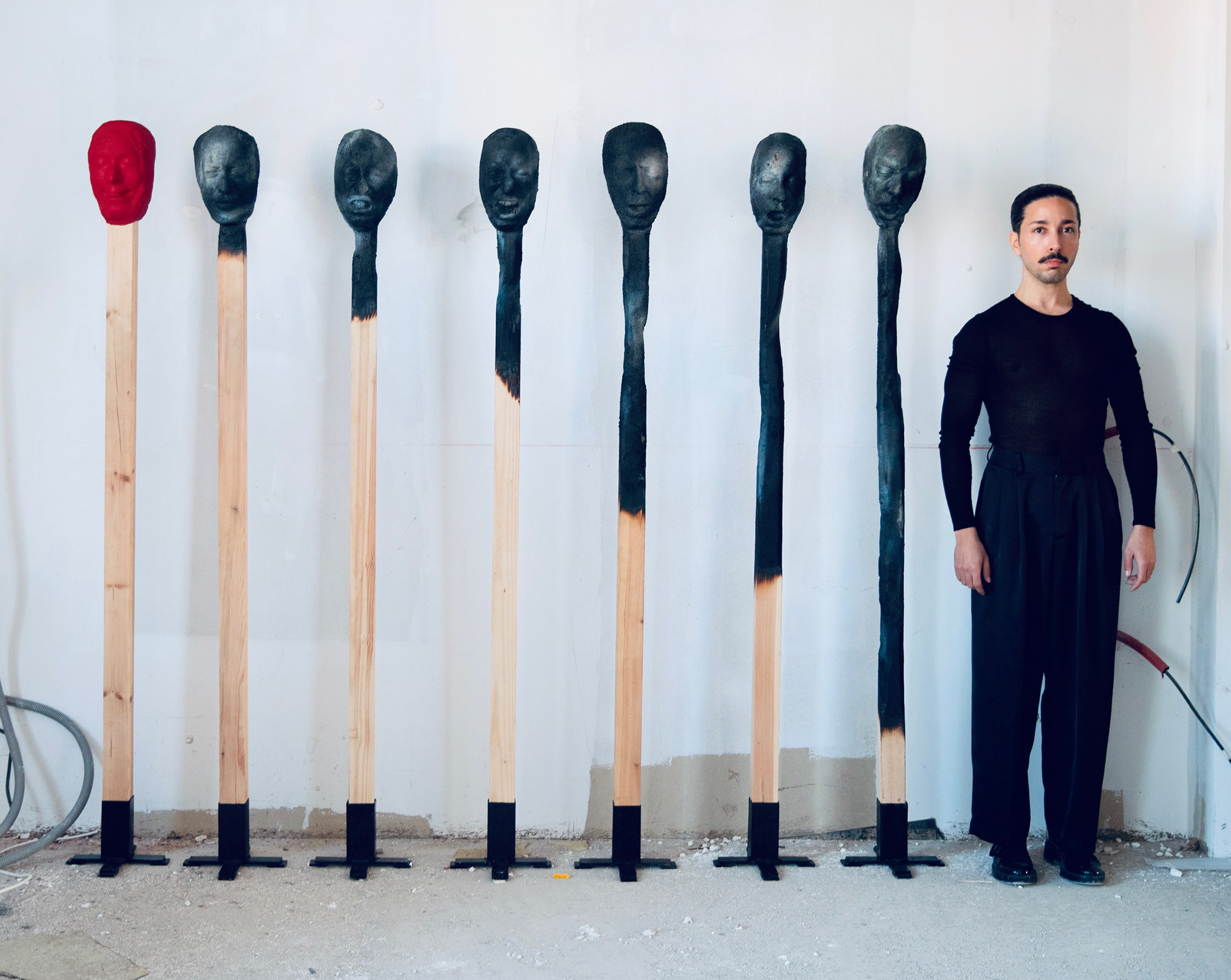
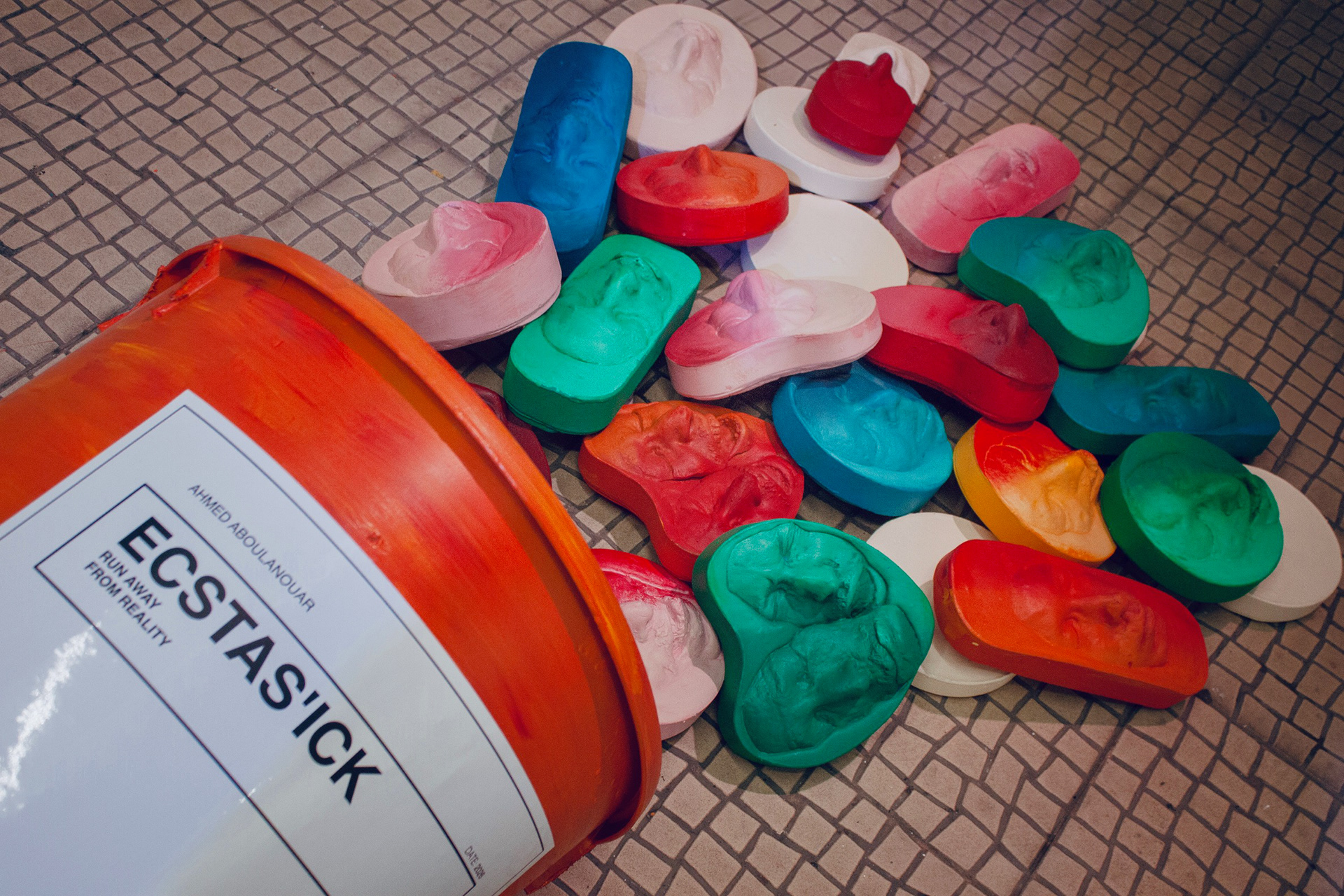
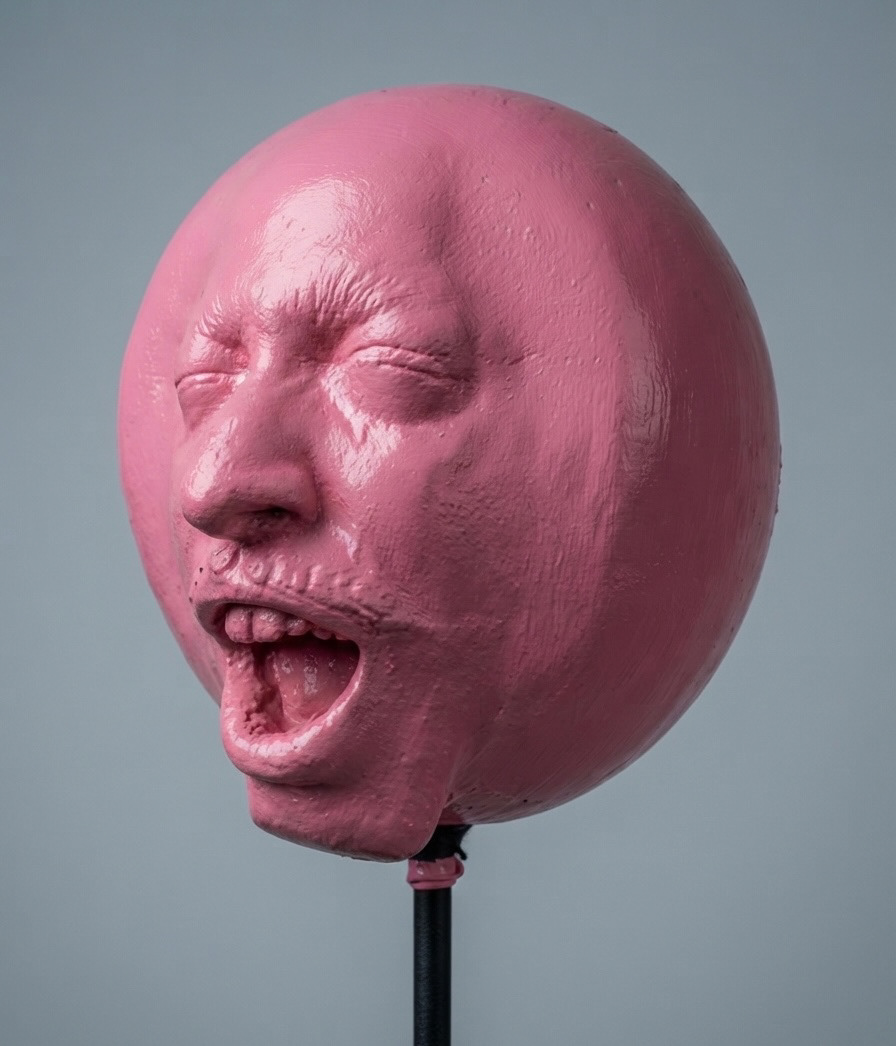
His sculptures often incorporate moulds taken directly from his own body, reinforcing the deeply physical relationship between his personal experiences and the work itself. For him, every artwork carries the emotional weight of its creation.
"Every piece feels like birthing a child."
He describes the process as "a painful cycle of wrestling with trauma," before adding, with characteristic dark humour, "it's cheaper than therapy."
Rather than distancing himself from difficult memories, he repeatedly returns to them, allowing each work to reshape both his artistic identity and his understanding of himself.
Why personal stories become universal
Although his work is rooted in lived experience, Aboulanouar believes its emotional impact comes from something much broader than autobiography.
For him, experiences such as loneliness, grief, misunderstanding and insecurity are not unique to one individual or culture. They are part of being human.
"Being human is a shared, international experience."
By exposing his own vulnerability, both emotionally and physically through his sculptures, he believes personal narratives become spaces where others recognise parts of themselves.
Instead of asking audiences to understand his life, his work creates room for them to reflect on their own.
Finding vulnerability through art
Interestingly, Aboulanouar admits he doesn't naturally find vulnerability easy in everyday life. Art has become the place where he feels able to express experiences that would otherwise remain unspoken.
"I use my art as a sort of facade or shield. It allows me to tell my truth and be vulnerable, but from a safe distance."
Returning to painful memories has never been comfortable, but over time the process has shifted from reopening wounds to reclaiming ownership over them.
"I'm taking my past trauma and transmuting it into art. It makes me feel like I'm finally gaining back control."
Leaving space for interpretation
For Aboulanouar, an artwork is never complete once it leaves the studio. Its meaning continues to evolve through the people who encounter it. Rather than explaining his intentions, he prefers beginning a conversation with a question.
"I want people to feel first."
When viewers ask what a work represents, his response is rarely an explanation. Instead, he asks them:
"What do you see? How do you interpret it?"
By refusing to impose a definitive reading, he allows each person to become an active participant in the artwork rather than a passive observer.
Letting the work live its own life
Unlike many artists who develop emotional attachments to finished pieces, Aboulanouar experiences a sense of release. Once a work is complete, he considers it independent from its maker.
"I cut the cord the instant a piece is finished."
He explains that after spending much of his own life feeling restricted, he has no desire to restrict his creations.
Instead, he enjoys imagining them finding new lives beyond his studio, while his own attention naturally shifts towards whatever comes next.
Growing up between contradiction
Aboulanouar believes Morocco shaped his artistic imagination long before he recognised it. He describes the country as a place built from constant contrasts, where beauty exists alongside hardship, and tradition alongside restriction.
"Morocco is a complex layering of contradictions that has defined my creative DNA."
Although those contradictions often brought frustration, he now sees them as essential to his creative development.
Rather than rejecting those experiences, he embraces them as the tension that continues to fuel his work.
The question that remains unanswered
Despite years of making work rooted in healing and self-exploration, Aboulanouar believes one question still sits at the centre of his practice. It isn't about recognition, success or future projects. Instead, it is a question he continues asking himself every time he creates.
"Will I stop creating once I'm healed? And deeper still, will I ever truly be healed?"
Rather than offering an answer, he allows the question itself to remain open, much like his artworks, inviting reflection instead of certainty.
Photos : Ahmed Aboulanouar