
IN CONVERSATION WITH SALMA FINNAOUI
On curiosity, creative freedom, and refusing to be one thing
Salma may be widely encountered through Salmatoon, but trying to separate the person from the creative identity quickly becomes complicated. As she puts it, "Funny enough, I really am mostly Salmatoon."
Behind that identity is someone driven by curiosity. She gets obsessed with random things, moves between hobbies, abandons some before returning to them, and enjoys making things simply for the pleasure of making them. There is also a contradiction she embraces: she describes herself as private and introverted in everyday life, despite having built a creative presence around expression and visibility.
Across her work, that curiosity moves between characters, fashion, storytelling, visual culture and the mundane details most people might overlook. In this conversation , Salma reflects on being truly seen, refusing the pressure to choose a single path, the Moroccan visual references she carries with her, learning to let go of perfectionism, and why creativity sometimes needs boredom to return.
Curiosity before titles
Asked who she is beyond Salmatoon and the professional titles attached to her today, Salma does not draw much of a distinction.
"Funny enough, I really am mostly Salmatoon."
She describes herself simply as someone who likes experiencing things. Curiosity can become obsession, leading her towards random subjects and new hobbies that she might pick up, leave behind and eventually revisit. Making does not always need an objective either. She enjoys creating for the sake of creating.
Away from her online presence, however, she considers herself quite private and introverted, something she recognises as slightly ironic given what she does publicly.
What she wants from the future is similarly uncomplicated: to continue learning, creating and having fun, and hopefully never take life too seriously.
Finding stories in the smallest details
Observation came long before Salmatoon.
For as long as she can remember, Salma has learned lyrics quickly, picked up accents easily and retained the facial features of people she might have encountered only briefly.
But what interests her is not simply memory. It is context.
"I love details because they add so much context."
When recounting a night to friends, her attention can move towards seemingly mundane elements: the lighting in a room, the collective mood of people's outfits, even the scent of the taxi. Those details became part of the way she tells stories, and eventually found their way into her content.
Her own explanation for this instinct is considerably less serious: "Soft skills hahah."
From interpreting characters to building worlds
The evolution from parody and performance towards more complete visual worlds did not feel like a radical departure to Salma.
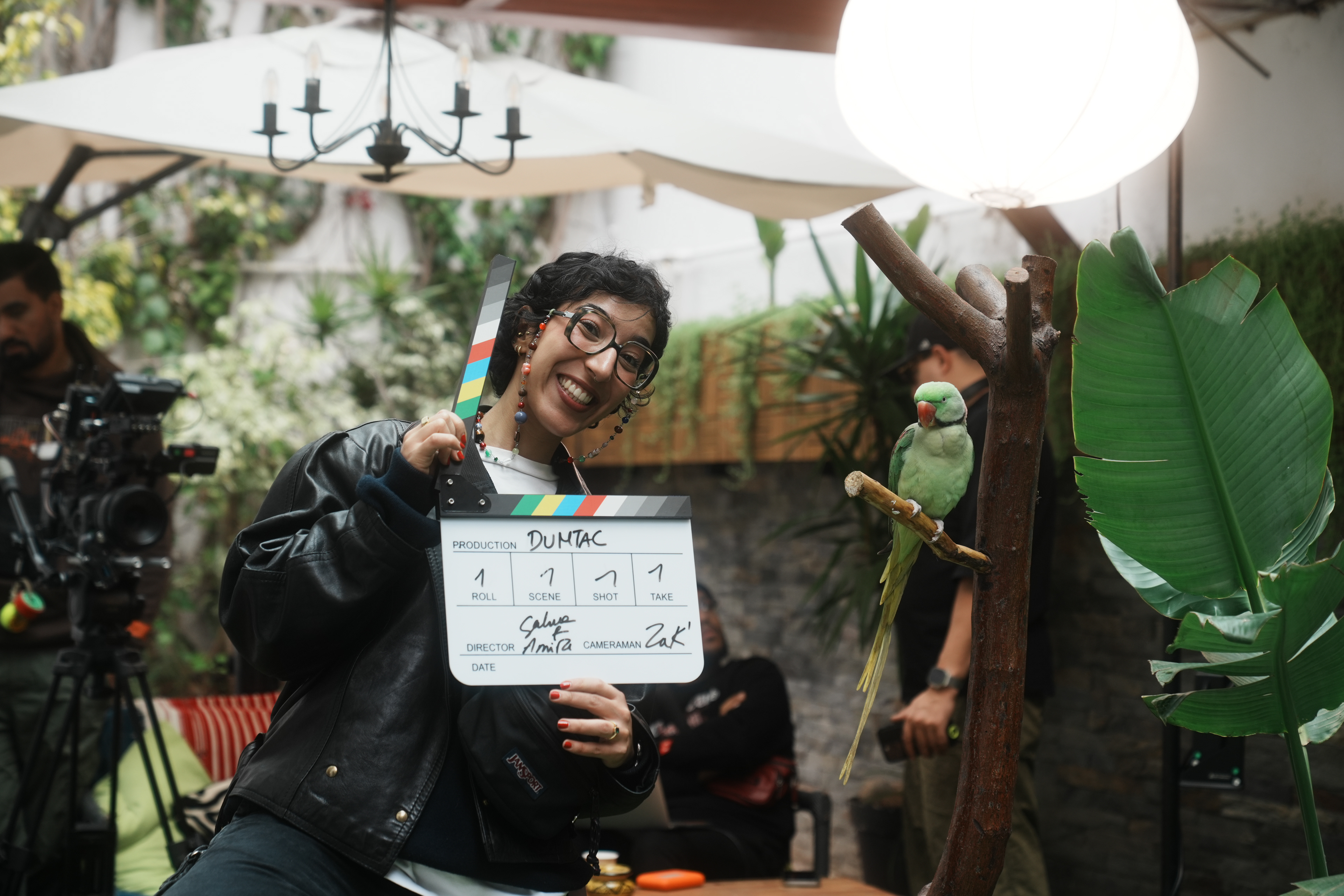
She had already been exploring that territory through theatre and through Dumtac, her creative agency. As her experience developed, so did her taste and skills, creating a natural desire to bring more to each idea.
"Over time you forge your taste, develop your skills, and naturally want to bring more to the table."
Her community has also played a role. She describes it as smart and curious, with an appreciation for fun concepts and for the work behind them. That recognition pushes her to deliver as well as she can.
But there is another motivation behind increasingly ambitious ideas. Making things more difficult is simply more fun for her.
Wanting to be truly seen
Despite everything that has changed since she started, one instinct remains: having fun without becoming too concerned about how she is perceived.
That relationship with visibility contains one of Salma's more interesting contradictions.
"As much as I'm a private person IRL and don't particularly like being seen, I love being seen online, truly seen, haha."
Online expression gives her room to reveal her identity and taste, alongside the stupid things she enjoys and the random parts of herself that might otherwise remain private.
Being visible, in that sense, is different from being seen. What matters to her is having a space where the many pieces of her personality can exist together.
Refusing to choose one thing
As a child, Salma believed she would eventually have to choose. One hobby. One direction. One thing to become.
She now sees that assumption differently. The desire for change and the ability to love several things simultaneously do not need to contradict each other. One interest does not diminish another.
Her bio captures that philosophy through the Darija expression "sb3 snay3 o rze9 ma daye3." She also refers to the longer version of the familiar saying: "A jack of all trades is a master of none, but oftentimes better than a master of one."
She does not claim mastery over the different skills she uses, whether fashion, editing, videography or storytelling.
Instead, she locates that mastery somewhere else.
"I'm nowhere near a master of all the soft skills I use, but I am a master of my own brain, my creativity, doing what I want to do and enjoying my life."
It may sound silly to her, but she insists that it is true.
Carrying home through visual culture
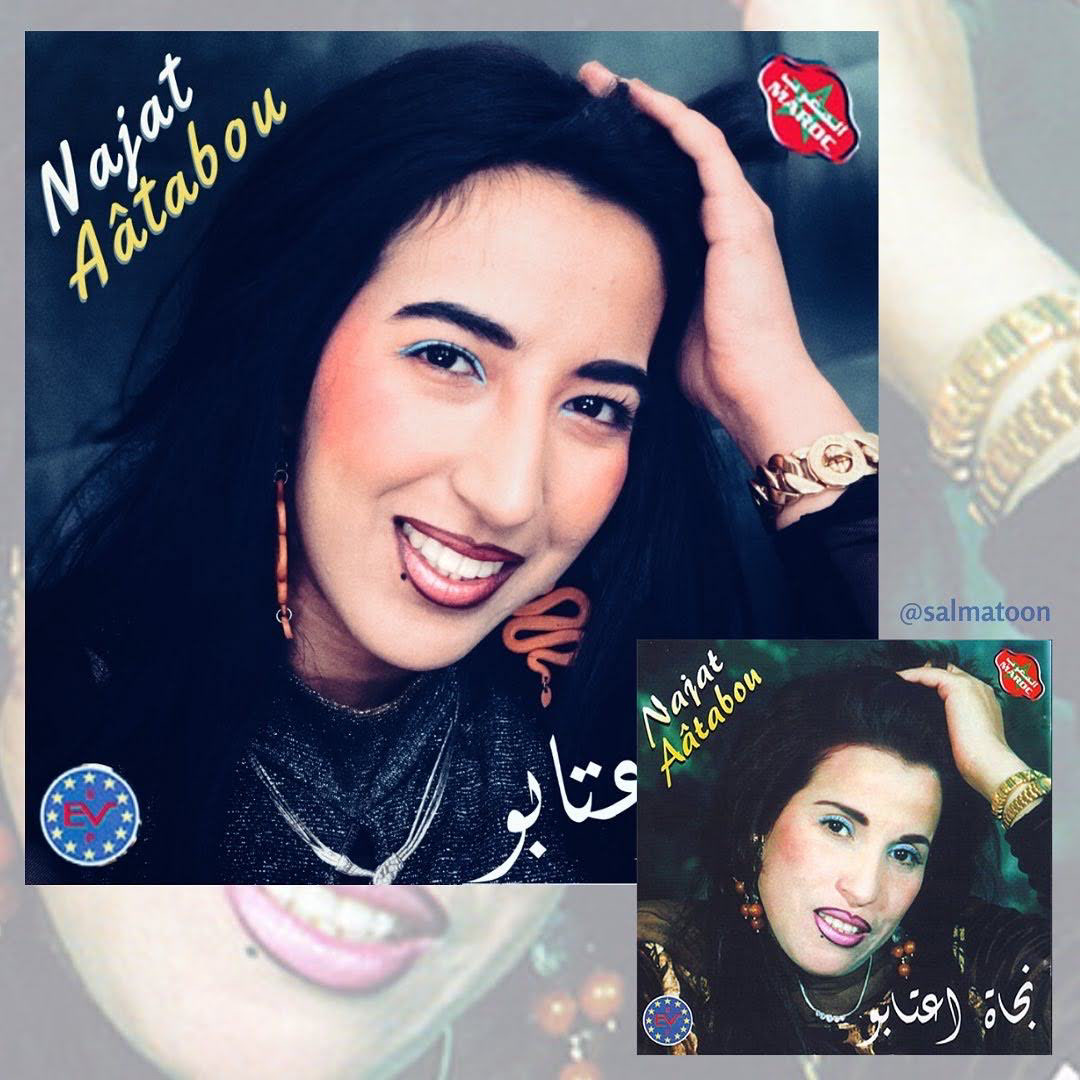
Moroccan influence enters Salma's work through music, but also through textures, patterns and the visual culture surrounding everyday life.
One reference is permanent.
She has an ankle tattoo inspired by a zellij pattern from the house where she grew up. The pattern carries personal significance, turning something architectural and familiar from childhood into something she continues to physically carry.
"Moroccan visual culture is so rich that I think it inevitably finds its way into how I see and create things."
Rather than describing Moroccan culture as a separate layer deliberately added to her work, she presents it as something already embedded in how she looks at the world.
Protecting the energy to create
Moving from personal creation into developing ideas for brands and clients did not fundamentally change Salma's creative approach.
She treats brand projects much like her own creations. The process remains similar, even if its expression changes according to the project.
Working with people who understand her thinking makes that possible. She describes her team as complementary, and says she has been fortunate to work with clients who genuinely appreciate what they do. As a result, the process often feels smooth enough not to feel like work.
But professional creativity has taught her that creative energy has limits.
"The main thing I've learned is to sometimes take three steps back and protect that energy. Creativity isn't endless."
Sometimes, rather than trying harder to generate another idea, the answer is to stop.
"Sometimes you need to let yourself get bored again for it to come back."
Learning to accept okay
One of Salma's most significant lessons has been accepting that something completed at an "okay" level can be more valuable than an imagined perfect version that never exists.
For her, procrastination and perfectionism can prevent creatives from actually making and releasing work.
"Procrastination and perfectionism are the death of creatives. They're a curse, not the flex we sometimes think they are."
It is something she says she had to learn the hard way. Without eventually accepting it, she believes she might still be stuck and would probably not have done half of what she has accomplished.
That means occasionally making something she personally considers merely "okay" and releasing it anyway.
Learning to do that has itself become something she is proud of.
Let your brain do splits
When Salma thinks about what she wants her work to contribute to Morocco's creative scene, she returns to the idea of difference.
She wants people to stop worrying so much about fitting into a box, and to give themselves permission to move between mediums, try unfamiliar things and even be bad at something new.
"Let your brain breathe. Let it do splits."
Her understanding of creativity also extends beyond conventional ideas of artistic talent. Creativity and talent can coexist, she argues, but they are not synonyms.
For Salma, creativity can appear through food, art, sewing and videos, but equally through the stories and jokes someone tells their family. It is less about proving mastery than allowing expression to exist.
"We're humans, we're born to create."
And perhaps her philosophy can ultimately be reduced to something even simpler:
"Express yourself, be kind, be free, and be proud of where you come from."
Photos : Salma Finnaoui
Photos : Salma Finnaoui