

ZOOM IN WITH ASTRO
A 3D artist building worlds between futurism, fashion and technology
For Astro, 3D is not simply a tool for producing images. It is a space for constructing realities that do not yet exist.
Working between 3D art and creative direction, his practice brings together futurism, surrealism, fashion and technology. His process can begin with a film, a book, a piece of architecture or a small detail encountered in everyday life, before moving through research, experimentation, modelling and eventually rendering.
In this Zoom In, Astro takes us through that process, from developing his visual language and organising references to knowing when an imagined world has finally reached the form he had in mind.
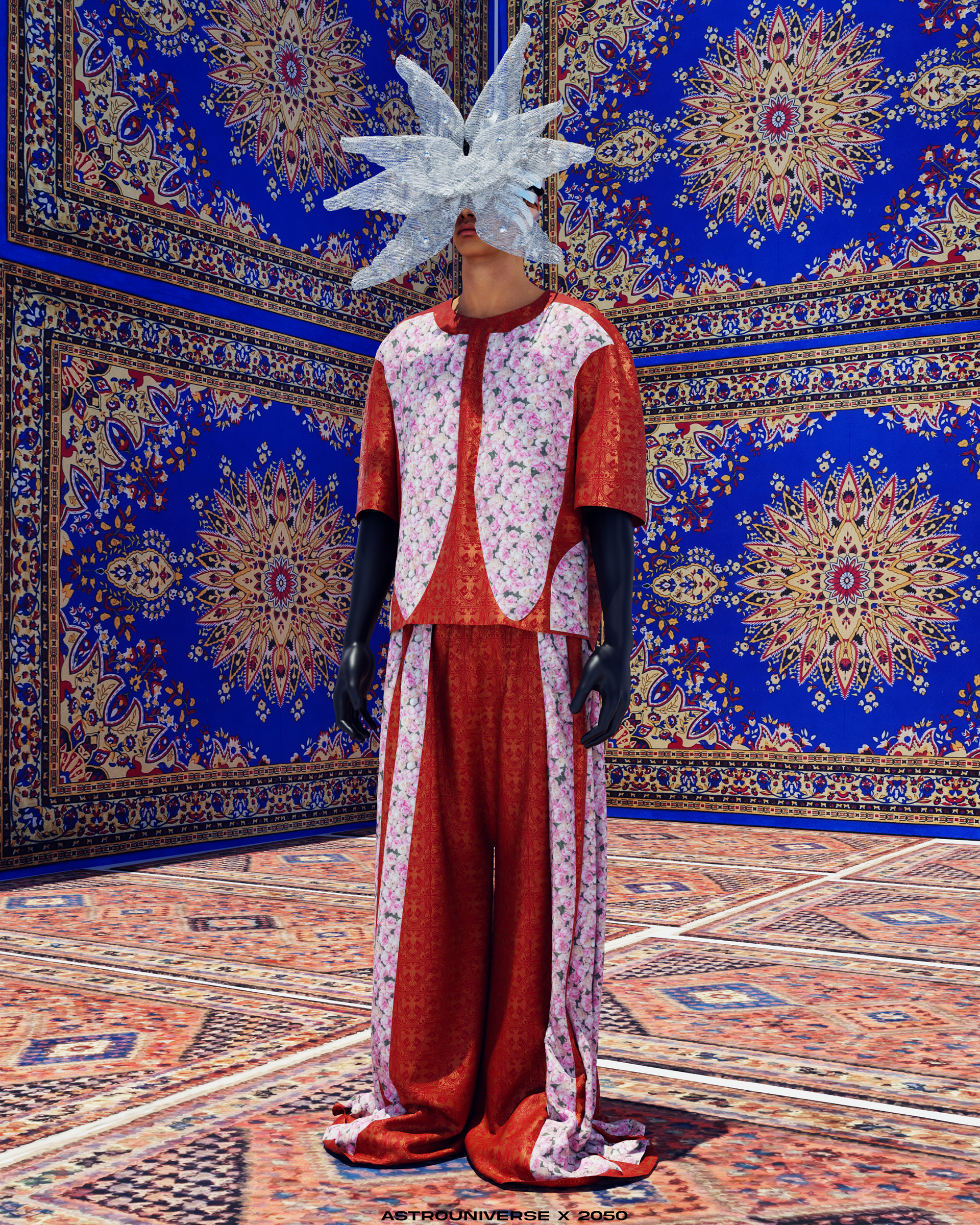
Building a recognisable visual language
Astro describes himself as a 3D artist and creative director working at the intersection of futurism, surrealism, fashion and technology.
For him, 3D extends beyond its function as a creative tool. It provides a space where he can build realities that do not yet exist, beginning with something that exists only in his mind and finding a way to make it visual.
That search also means continuously looking for new ideas, forms and ways of seeing. Creating something visually beautiful is not enough for him. He wants the result to feel different and possess an identity of its own.
Underlying that approach is his belief that every artist needs to develop their own language. His is still evolving, but the ambition is clear: to develop a personal touch distinctive enough for someone to recognise his work before seeing his name. The combination of futurism, surrealism, fashion and technology remains central to the language he continues to develop.
References as ingredients rather than instructions
Before Astro begins working in 3D, a considerable part of the process is dedicated to collecting references.
He watches films, explores Pinterest, studies fashion and follows the visual universes created by brands such as Balenciaga. Architecture is another important source. Shapes, spaces and ideas found within it can become elements that he later translates into his own work.
His references are organised into separate folders covering fashion, architecture, photography, cinema, objects, materials and other areas. Keeping them organised individually allows these otherwise distinct visual worlds to collide when a new project begins.
Each project then receives its own moodboard. Before opening Blender, Astro uses it to establish the atmosphere, shapes, colours, textures and overall feeling he wants to explore.
The references, however, are never intended to dictate the final result. He approaches them as ingredients. Ideas and elements connected to his initial vision are collected, broken apart, combined and reinterpreted until they become something specific to his own visual universe.
From an everyday detail to an imagined world
There is no single starting point to Astro's process.
An idea might emerge while watching a film, reading a book or observing something in real life. Sometimes the trigger is no more than a shape, movement, material or small detail that catches his attention.
When that happens, his first instinct is to write the idea down before losing it. Research follows, alongside collecting references and developing a concept around what initially caught his attention. At this stage, the question becomes what the original idea could turn into once placed inside his own visual universe.
Only then does the technical 3D process begin.
The project moves through modelling, texturing, camera work, lighting, animation and rendering. Once the render is complete, Astro moves into post-production to refine the final image.
Rather than following a fixed formula, his process revolves around transformation. Something discovered in the existing world becomes the starting point for something that, in its final form, could only exist inside the world he has created.
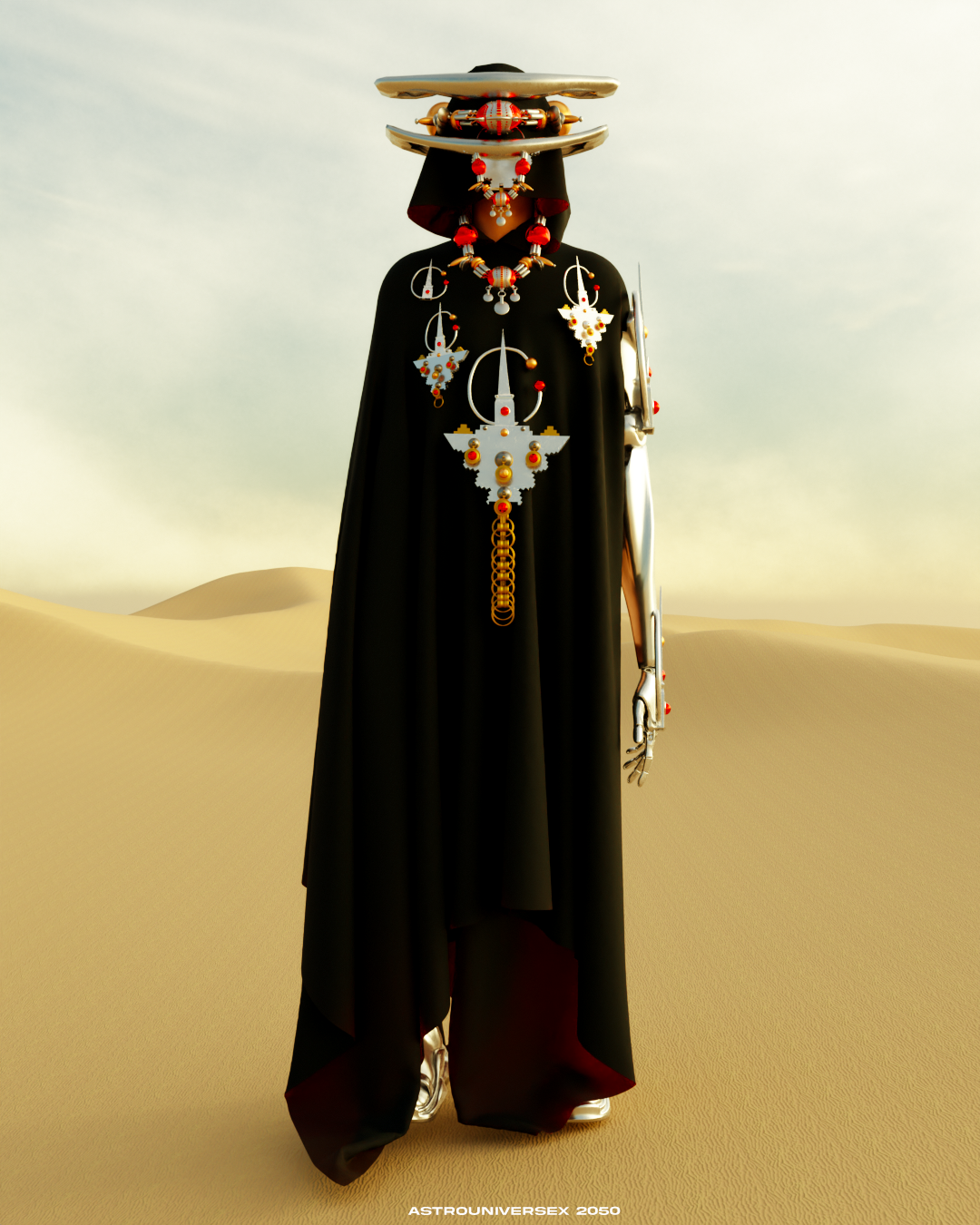
Searching, testing and starting again
The most time-consuming part of Astro's process often happens before the final image begins to take shape.
The search itself can take the most time: finding the right idea, direction and visual language for a particular project. Modelling can then become another demanding stage, particularly when the objective is to create something new rather than reproduce something that already exists.
Experimentation runs throughout that process.
Astro makes numerous tests, changes elements, breaks things, starts again and continues making small adjustments until the different parts begin to feel right.
His attention then shifts increasingly towards detail. He continues refining and adjusting the work in pursuit of the result he originally imagined, with the aim of making the final piece feel as resolved as possible.
Lighting as part of the world's atmosphere
Lighting has a central role in establishing how Astro's scenes feel.
Rather than treating it simply as a technical stage, he sees lighting as what allows a 3D world to feel alive. Changing the light can completely alter how the same object or environment is perceived.
Atmosphere therefore becomes inseparable from the construction of the scene itself, influencing how the world he has created is ultimately experienced.
The vision before the 3D
Although Astro works extensively through 3D, he considers his perspective as a creative director to come first.
When developing something new, his thinking does not begin exclusively with the visual execution. He first develops the idea behind it, the story, the world in which it exists and the way he wants an audience to experience it.
That approach extends into his interest in the marketing side of creativity, particularly the artistic decisions involved in presenting an idea and shaping how people perceive it. He considers how an audience will discover the work, what they should feel and how the concept might exist beyond a single final image.
The questions he asks himself therefore extend beyond how something can technically be produced in 3D. He thinks about what the world is, why it exists, the story behind it and how to make people want to enter it.
Within that process, 3D becomes one component of a broader creative vision. The vision itself always comes first.
Knowing when to stop
For a process involving constant experimentation and refinement, deciding when a piece is finished requires its own judgement.
For Astro, that point arrives when the result finally corresponds with what he had in mind at the beginning.
By then, the project has travelled through its initial idea, references, modelling, materials, camera, lighting, animation and numerous smaller adjustments. Eventually, he reaches a moment where the different elements align with the original vision.
It does not mean that nothing else could technically be changed. Instead, continuing to alter the piece would begin taking it further away from what he originally wanted to create.
That is when the work is finished.
Creativity under pressure
A recent project for a clothing brand in the United States tested Astro's process under very different conditions.
He had approximately two weeks to develop a full collection, while also navigating several rounds of revisions. The challenge was not only technical. He had to manage the creative demands of the project alongside a compressed deadline.
That meant making decisions quickly, solving problems as they appeared and continuously adapting the work without losing sight of its original vision.
The experience pushed his workflow harder than previous projects had. Through it, he improved the way he worked, learned to make creative decisions under pressure and developed greater discipline while continuing to protect the quality of the final result.
Although he found the period exhausting, it also showed him how constraints can reveal capabilities that might remain undiscovered under more comfortable circumstances. A tight deadline became not only a limitation, but a test of how discipline, adaptability and creativity could coexist within the same process.
Photos @astro.uxc