
A new artist residency in Casablanca creates space for local and international exchange
Yasmine Laraqui Studio Residency brings artists, researchers and cultural practitioners together in Casablanca, with year-round open calls and dedicated support for Morocco-based artists.
Yasmine Laraqui Studio Residency brings artists, researchers and cultural practitioners together in Casablanca, with year-round open calls and dedicated support for Morocco-based artists.
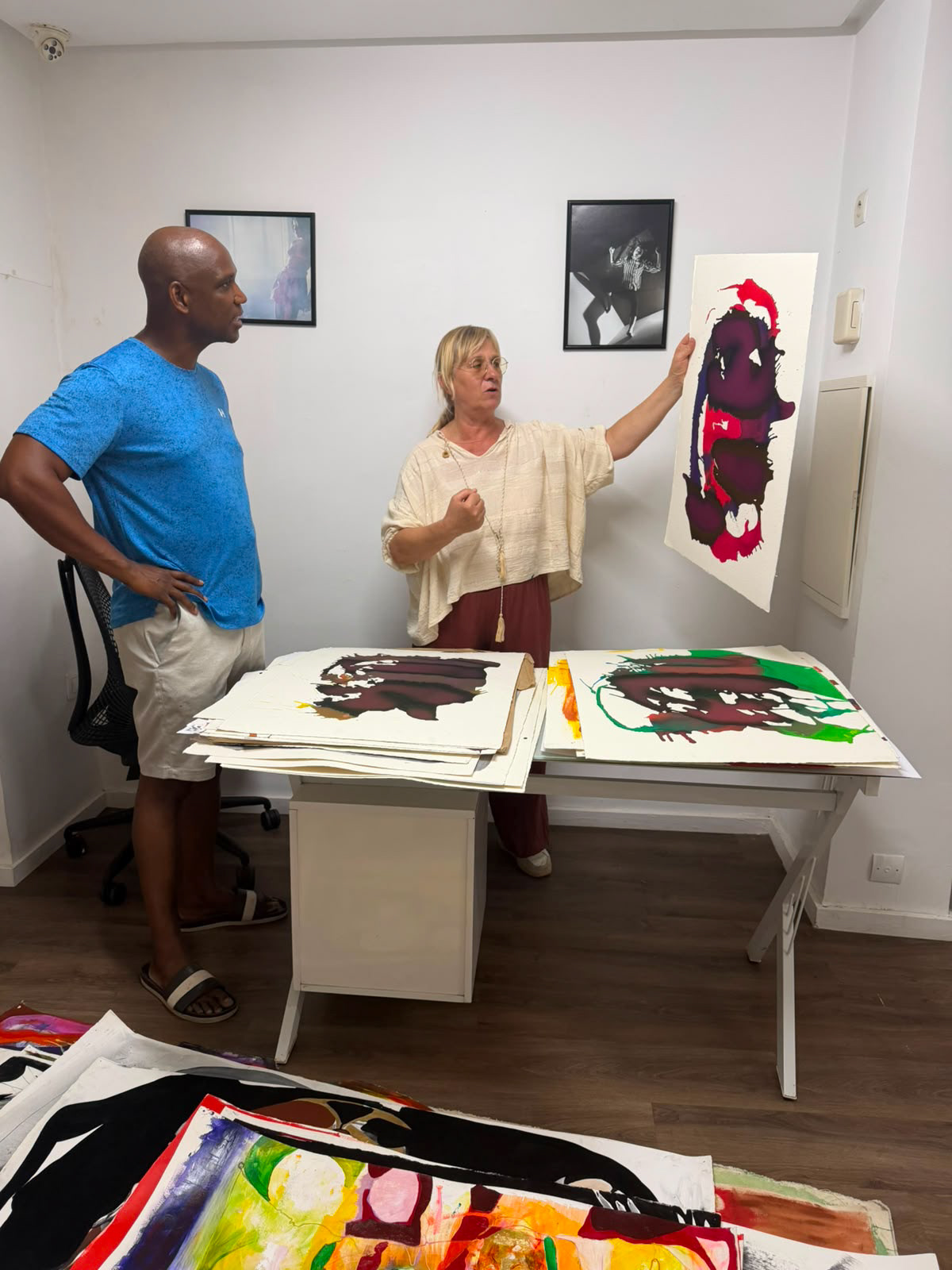
Casablanca has a new space for artists to research, experiment and create without the immediate pressure of producing something commercial.
Located between the Mers Sultan and Palmier neighborhoods, the Yasmine Laraqui Studio Residency is a multidisciplinary research and production program welcoming artists, writers, filmmakers, curators, designers, researchers and other creative practitioners from Morocco and abroad.
Behind its creation is an observation made by founder Yasmine Laraqui about the Moroccan contemporary art landscape: while the country has significant artistic energy, she believes there are still relatively few independent structures where artists can dedicate time to research, experimentation and the development of their practice.
The residency was conceived as one response to that gap.
“The ambition is not to become another conventional art institution, but to contribute to a more connected, experimental and sustainable artistic ecosystem"
Its model works in two directions. International residents are invited to develop projects in dialogue with Casablanca, while the program also seeks to create opportunities for practitioners based in Morocco to develop their work and build relationships beyond the country.
The residency operates open calls throughout the year and features a fully sponsored local fellowship for Morocco-based artists. Programs typically run between one and three months, with private accommodation, 24/7 studio access and curatorial support among the resources available to residents.
But for Laraqui, providing physical space is only one part of what an artist residency can offer.
Support is adapted to each artist and project rather than following a standardized formula. Depending on individual needs, it can include conceptual and curatorial guidance, research support, introductions to artists and cultural professionals, assistance with developing exhibitions or presentations, documentation and communication, and connections with international networks and opportunities.
“Sometimes what moves an artistic practice forward is not simply having a room in which to work, but meeting the right person, discovering another context, or having someone critically engage with the project"
That emphasis on access is closely connected to Laraqui’s own experiences as an artist. After living and working between Casablanca, Paris and New York, as well as participating in residencies internationally, she became interested in the conditions that allow artistic practices to evolve.
“I created the residency because I wanted to build the kind of structure I had often looked for myself as an artist: independent, flexible, intellectually curious and genuinely connected to its environment,” she explains.
The program is intentionally multidisciplinary. Its scope includes visual art, photography, filmmaking, writing, sound, design, research and curatorial practices, with a particular interest in projects that move between disciplines or explore experimentation, technology, social questions and new forms of artistic production.
This openness also extends beyond the residency walls.
Casablanca itself is positioned as an essential part of the experience. Visiting residents are encouraged to encounter the city beyond established cultural institutions, through its neighborhoods, architecture, markets, cafés, craftspeople, archives, communities and everyday rhythms.
Depending on their research, Laraqui also connects residents with Moroccan artists, galleries, cultural actors and people whose knowledge may contribute to their projects. These exchanges can take the form of introductions, visits, conversations and public presentations, as well as more spontaneous encounters.
“The objective isn’t for international artists simply to come to Morocco, produce work and leave,” Laraqui says. “I want the residency to create genuine exchanges in both directions, between visiting artists and Casablanca, but also between international and Moroccan practitioners.”
That distinction is important to the residency’s positioning. Rather than treating Casablanca primarily as an inspiring setting for visiting artists, the intention is to make relationships with the city and its existing creative ecosystem part of the residency process itself.
Its recent public presentation offered an early example of that approach. At Mine d’Art gallery in Casablanca, the residency presented work by its latest resident, Wendell Smith, following his time in the city. The exhibition was held in collaboration with Yasmine Laraqui Studio and Casablanca Residency.
As the program develops, Laraqui ultimately sees the residency as a bridge rather than simply a destination.
Her ambition is to connect Morocco with international artistic communities, create encounters between emerging and established practitioners, and bring artistic research into closer dialogue with Casablanca itself.
“I became increasingly interested in what happens when artists are given not only space, but access, to people, conversations, knowledge and different ways of seeing,” she says.
For Morocco’s contemporary creative ecosystem, that proposition raises a broader question about what meaningful support for artists can look like.
A studio provides somewhere to work. A residency can potentially offer something wider: time to experiment, critical exchange, new relationships and access to contexts that allow a practice to move somewhere it could not have reached alone.
Photo : Yasmine Laraqui Studio Residency